On this page
"What does landscaping cost?" is the question every contractor gets asked and almost none answer in public. The honest reason: a landscape project can cost as much as a used car or as little as a weekend at the outlet mall, and contractors are afraid a number will scare you off. We'd rather you walk into your first estimate knowing what things cost. Here's what typical budget levels actually buy in the Joliet, Manhattan, and greater Will County area in 2026.
The Budget Tiers at a Glance
| Budget | What it is | Typical scope |
|---|---|---|
| $2,000 - $3,500 | The Refresh | Cleanup, edges, mulch, pruning, a few new plants |
| $5,000 - $8,000 | Front Yard Redo | Tear-out + designed foundation planting beds |
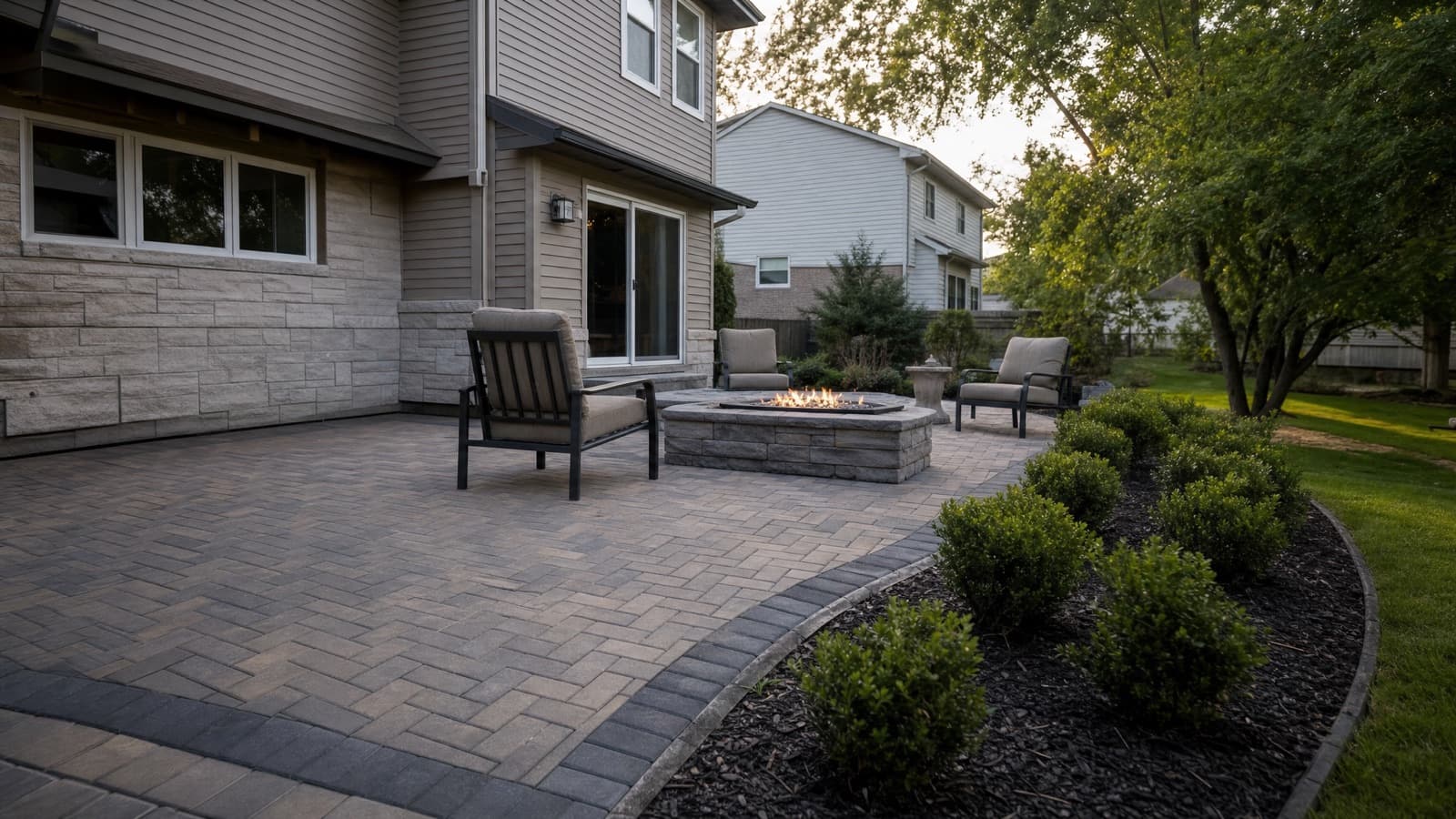
| $10,000 - $18,000 | The Outdoor Room | Paver patio + framing beds + one feature |
| $20,000 - $30,000+ | Full Transformation | Multi-zone patio, walls, drainage, lighting, full planting |
Around $2,000-$3,500: The Refresh
This budget doesn't redesign anything — it makes what you have look cared-for again:
- Full spring cleanup: cut back, weed, and reshape every bed
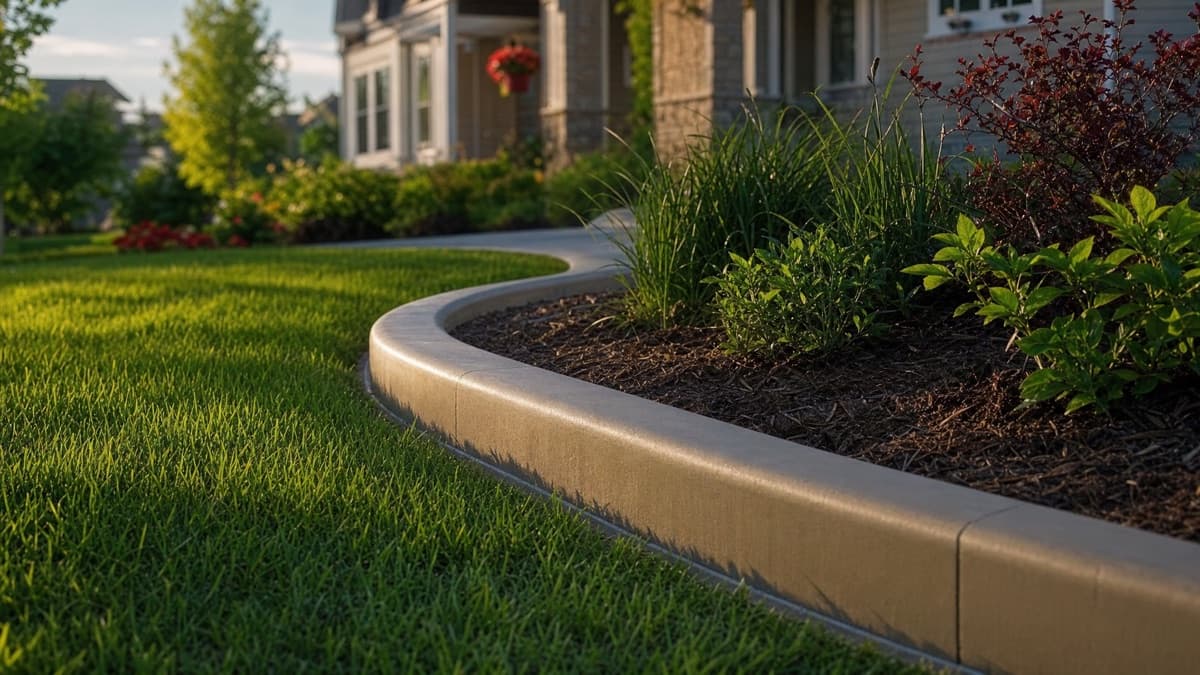
- Fresh spade-cut edges and 3-5 yards of premium hardwood mulch
- Pruning overgrown shrubs, removing one or two dead ones
- A handful of replacement perennials or a new small ornamental tree
This is the highest-impact-per-dollar tier, and for a house going on the market it's often all you need. Run your beds through our mulch calculator to see where a chunk of this budget goes.
Around $5,000-$8,000: The Front Yard Redo
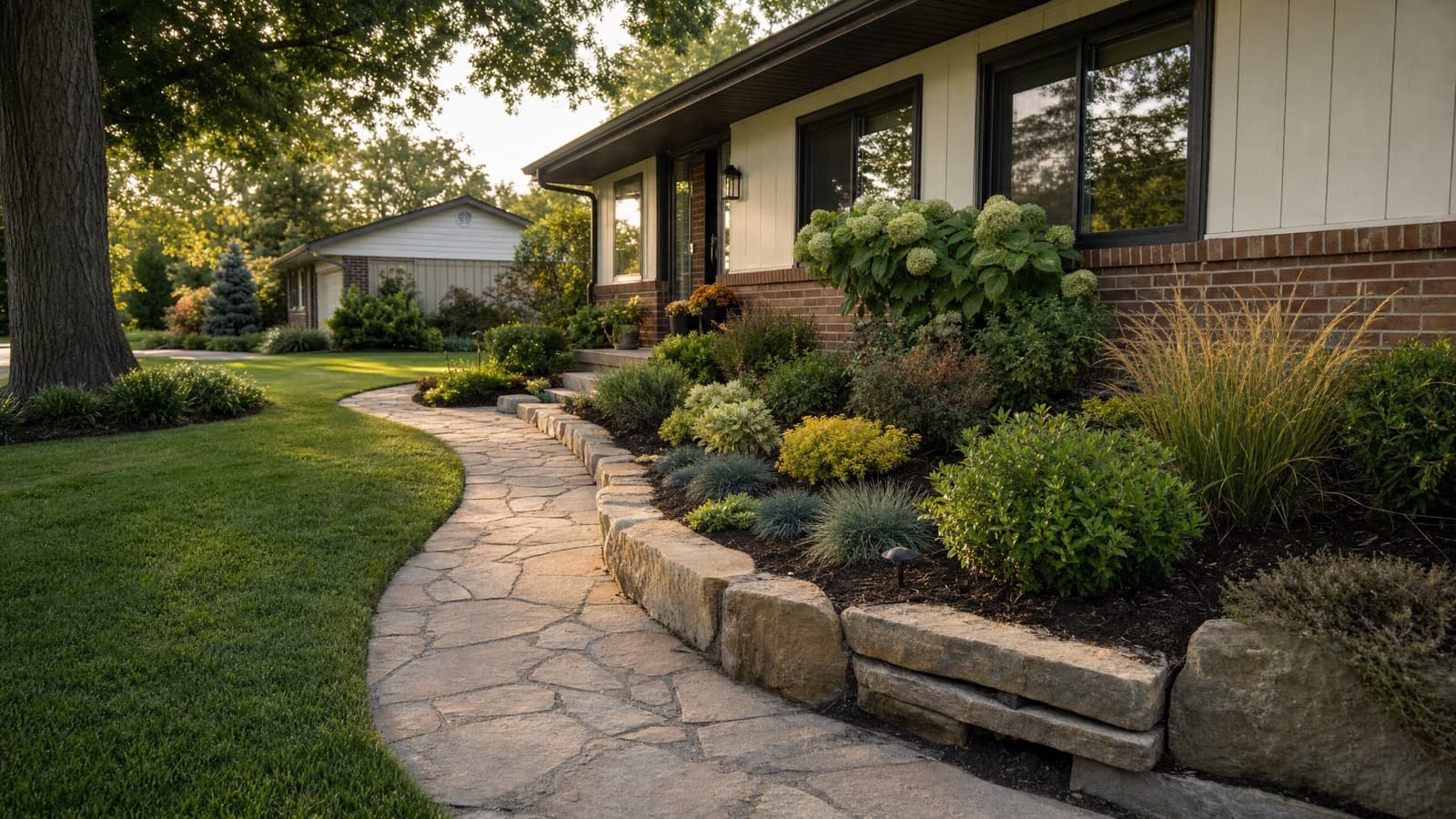
Enough to genuinely redesign one area of the property — usually the front foundation beds:
- Tear-out of overgrown 1990s-era shrubs (junipers, yews gone woody)
- A designed planting plan: layered evergreens for winter structure, flowering shrubs, perennials
- New bed lines with steel or spade-cut edging, fabric, and mulch
- Often room for an accent boulder grouping or a small ornamental tree
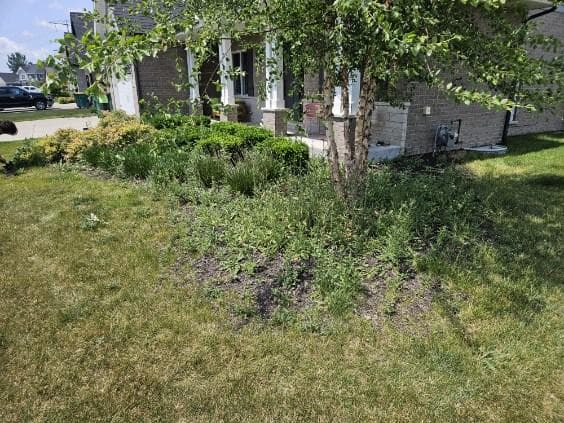 Before
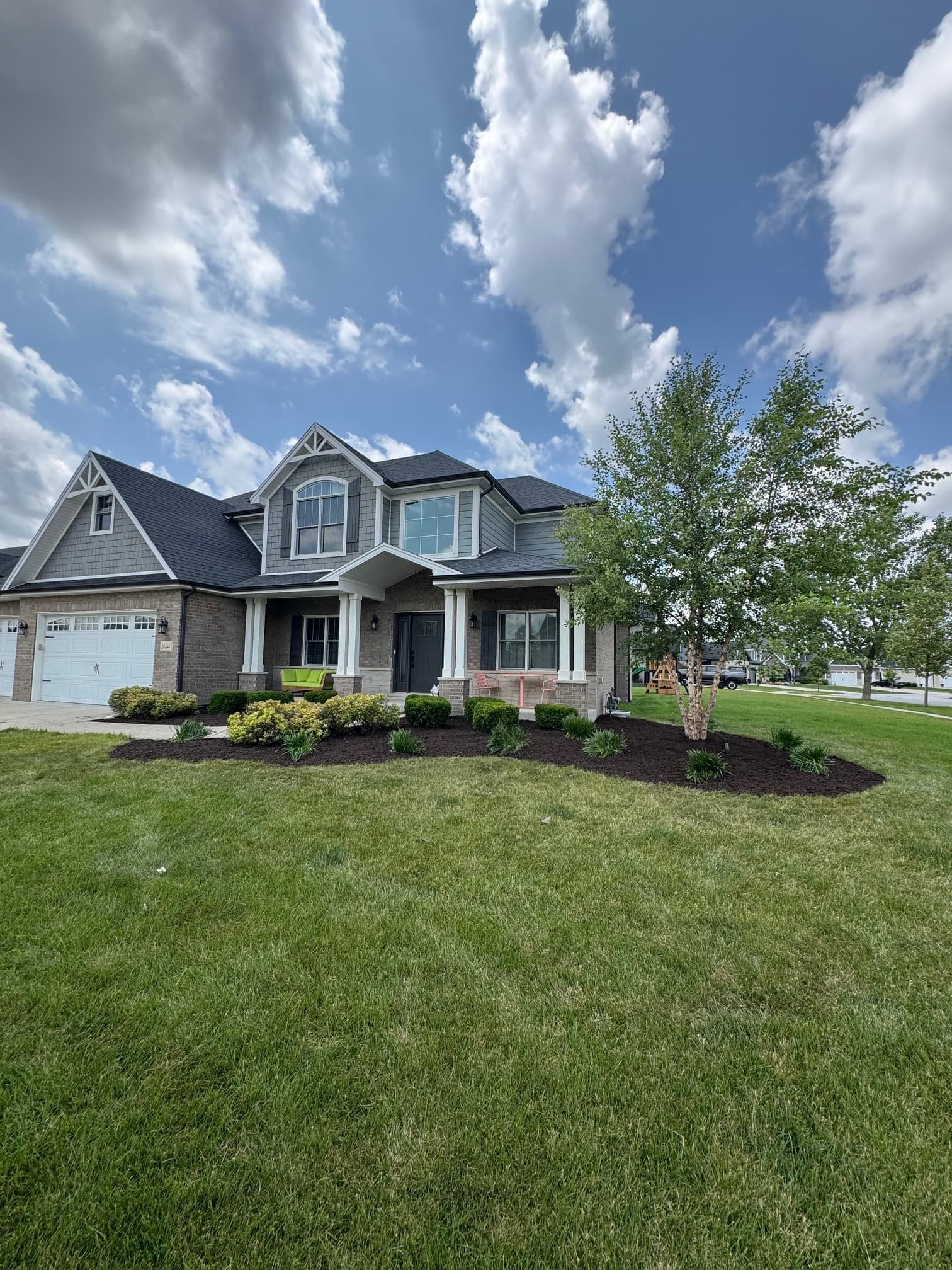 After
AfterThis is the classic curb-appeal project. Done with plants suited to Zone 5b and our clay soil, it looks better in year three than the day it was planted.
Around $10,000-$18,000: The Outdoor Room
Now hardscaping enters the picture, and hardscaping is where budgets grow — and where value holds:
- A 250-350 sq ft paver patio, properly built on a deep compacted base (see our paver cost guide for why the base matters here)
- Planting beds framing the patio for privacy and softness
- Often one feature: a fire pit, a short seating wall, or landscape lighting
At this tier, sequencing matters. Hardscape goes in first — machines drive over everything — then soil correction, then plants, then mulch. A good contractor will phase the plan so you never pay to redo a finished area.
Around $20,000-$30,000+: The Full Transformation
A blank-slate backyard or a whole-property renovation:
- Large patio with multiple zones (dining + fire pit lounge), borders and inlays
- Retaining walls or terracing where the lot has grade to manage
- Drainage work: downspout extensions, regrading, sometimes a dry creek or drain tile
- Full planting design around the hardscape, lighting, and irrigation for the beds
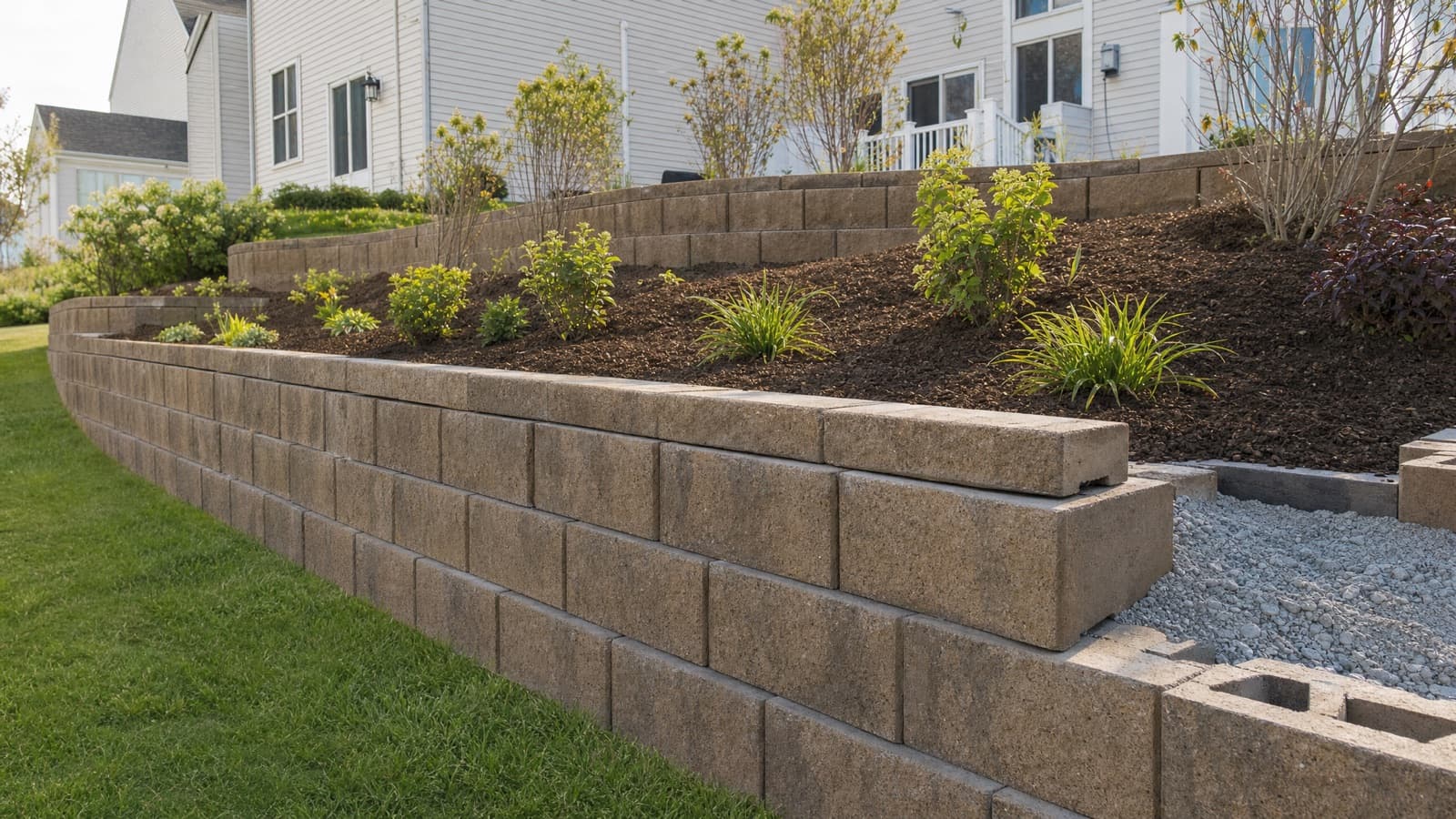
In newer Will County subdivisions where builders leave nothing but graded clay and sod, this is effectively "building the backyard the house never came with." Many families phase it over two or three seasons — patio year one, plantings and lighting year two — which spreads cost without wasting a dollar, as long as the master plan exists up front.
What Actually Drives Cost in Our Area
- Clay soil — nearly every planting project needs soil amendment, and every hardscape needs a deeper base than national articles assume. Budget articles written for Georgia don't survive contact with Will County clay.
- Drainage — flat lots and clay mean water sits. Fixing it is unglamorous and worth every penny; skipping it undermines everything built on top.
- Tear-out and disposal — removing old landscaping, stumps, or a cracked slab is real labor and real dump fees, and it's the line item homeowners forget to expect.
- Plant size at install — a 3-gallon shrub costs a third of a 7-gallon one and catches up in three seasons. If budget is tight, buy smaller plants, not fewer plants.
Where Homeowners Waste Money (Our Unpopular Opinions)
- Cheap installs of expensive materials. Premium pavers on a thin base fail exactly like cheap ones. Spend on the invisible parts.
- Plant shopping without a plan. A cart of "that looks nice" from the garden center becomes a patchwork that never reads as designed. The plan costs little; it's the difference between a landscape and a collection.
- Rock mulch in planting beds. Cheaper over ten years, worse for the plants every one of those years, and expensive to undo.
- Ignoring winter. Around here the landscape is dormant five months a year. If the plan has no evergreens, it looks abandoned from November to April.
How to Get a Useful Estimate
Come to the first conversation with three things: a budget range you're comfortable saying out loud, two or three photos of yards you like, and honesty about how much maintenance you want to do. "Design me something great for around $8,000 that I barely have to touch" is a brief a good contractor can nail. "How much for landscaping?" with no other information gets you the vague non-answer this article was written to replace.
Want a Plan for Your Budget?
Above the Lawn Services builds custom landscapes, paver patios, and landscape renovations across Manhattan, Joliet, New Lenox, Frankfort, and the surrounding area. Tell us your number and we'll tell you honestly what it buys. Call (815) 520-2558 or request a free estimate online.
Get a Free Estimate