On this page
Retaining wall quotes confuse people because contractors price the same wall three different ways: per square foot of wall face, per linear foot at a given height, or as a lump sum. Underneath all three is the same math, length × exposed height × a per-square-foot rate for the material, plus the site factors that move that rate. Here are the real 2026 numbers, then the factors.
The Short Answer
Retaining Wall Cost by Material (Installed, 2026)
| Material | Installed / sq ft | Lifespan | Notes |
|---|---|---|---|
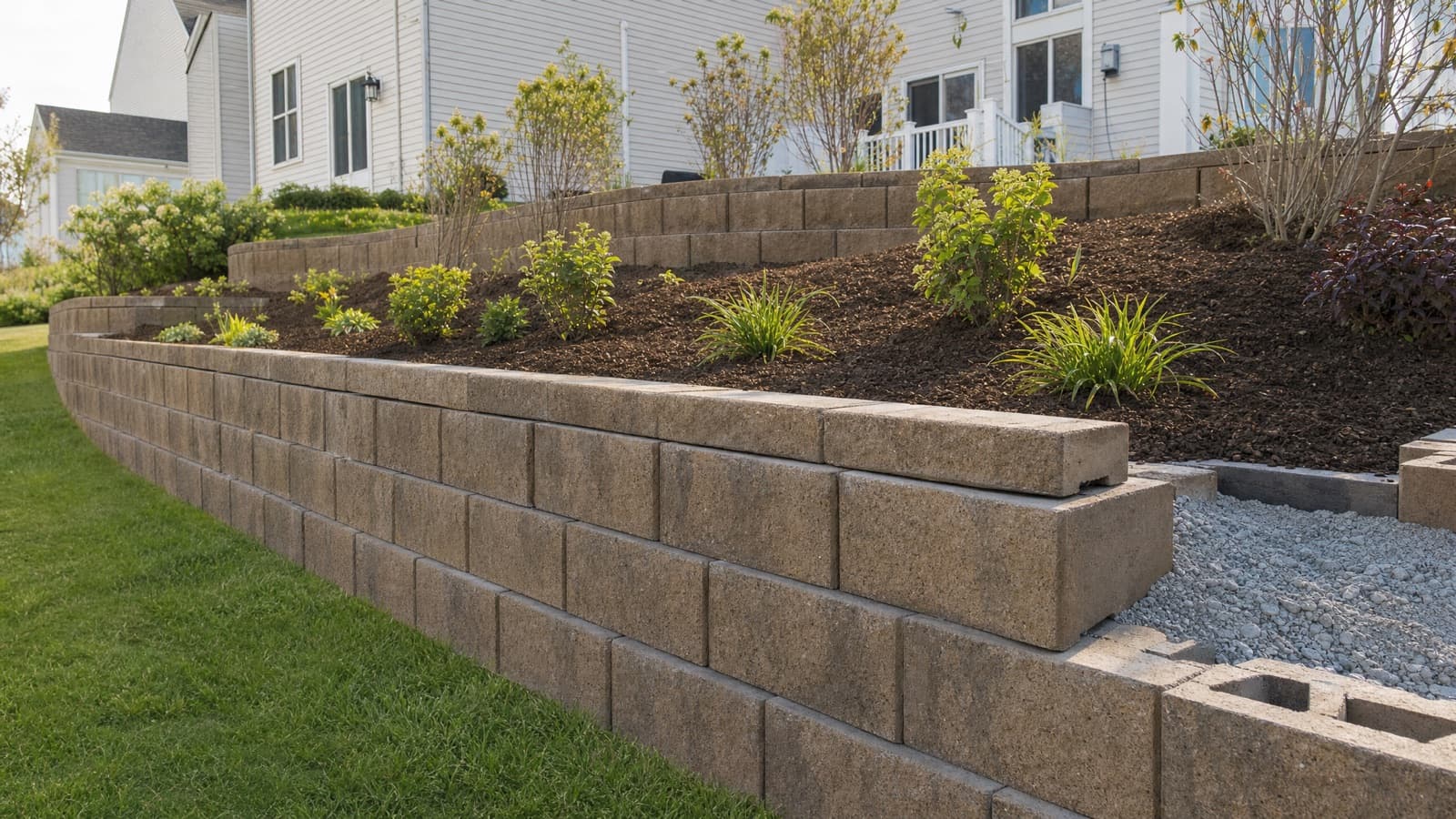
| Segmental block (SRW) | $25-$45 | 50+ yrs | The workhorse; huge style range; no mortar or footing |
| Poured concrete | $30-$60 | 50-100 yrs | Needs footings + forms; best for structural walls |
| Pressure-treated timber | $20-$35 | 15-25 yrs | Cheapest install; shortest life; rots from behind |
| Natural stone (dry-stack/veneer) | $40-$75 | 100+ yrs | Premium look, premium labor |
| Boulder / outcropping | $25-$55 | 100+ yrs | Machine-set; needs equipment access |
| Gabion baskets | $15-$40 | 50+ yrs | Industrial look; fast; great drainage by nature |
Wall face sq ft = length x exposed height. Rates assume normal access and soils; see cost drivers below.
Example Budgets
| Project | Size | Face sq ft | 2026 budget |
|---|---|---|---|
| Garden border wall | 25 ft x 18" | ~38 | $1,200-$2,200 |
| Bed terrace on a slope | 40 ft x 2.5 ft | 100 | $2,800-$4,800 |
| Backyard grade change | 50 ft x 3 ft | 150 | $4,000-$7,000 |
| Driveway-side wall | 60 ft x 4 ft | 240 | $7,500-$13,000+ |
| Walk-out basement terrace | 2 walls, ~350 sq ft | 350 | $10,000-$18,000+ |
Driveway-side and terraced walls often carry engineering and permit costs on top, see below.
The Hidden Cost Drivers
- Drainage (non-negotiable): washed gravel backfill, perforated drain pipe, filter fabric, and weep outlets. This is buried in every honest quote; its absence is why cheap walls lean by year five. Water, not soil, is what kills walls.
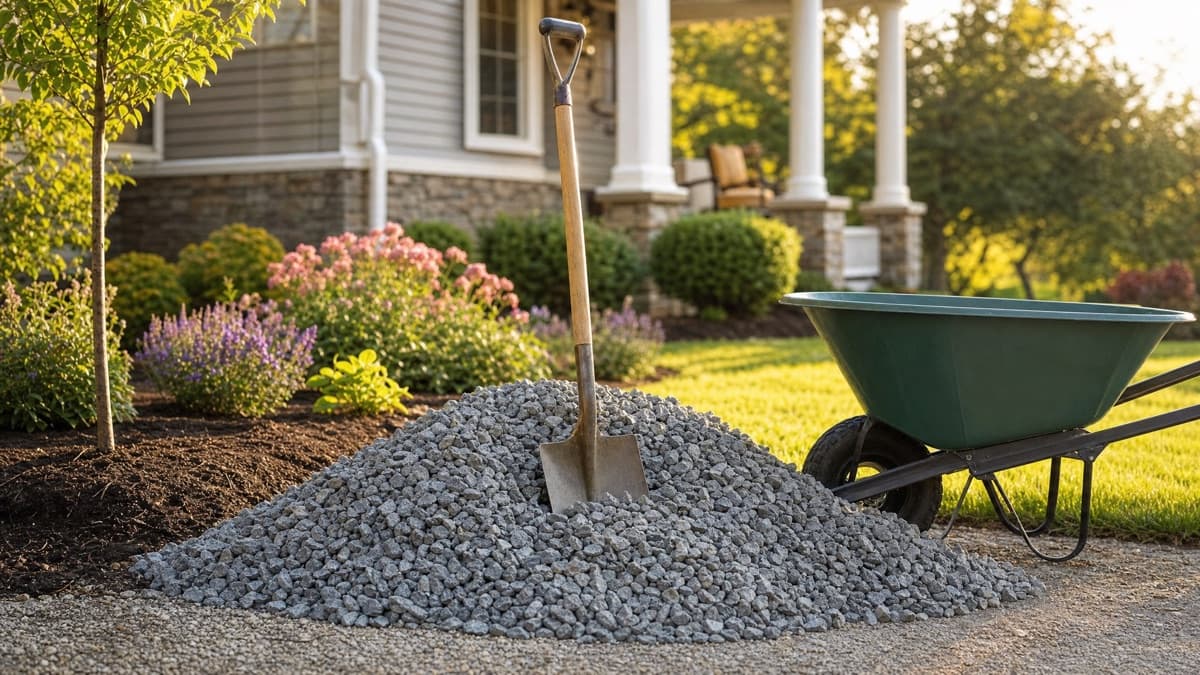
- Base prep: a compacted crushed-stone base 6 inches deep or more, with the first block course buried. On soft or clay soils, expect deeper excavation and more stone.
- Geogrid: soil reinforcement layers required as walls get taller, cheap material, but it means excavating further back into the slope, which is labor.
- Access: if a skid steer can reach the wall line, excavation is hours. If everything moves by wheelbarrow through a 36-inch gate, add 20-40% labor.
- Tear-out: removing a failed timber or block wall, plus disposal, commonly adds $15-$25 per linear foot before the new wall starts.
- Caps, lighting, steps: cap units add $10-$20 per linear foot; integrated steps and low-voltage lighting are line items of their own.
Permits & Engineering
The common thresholds: over 4 feet of retained height (bottom of base to top of wall) requires an engineered design and permit in most towns, and many jurisdictions lower that bar when the wall supports a surcharge, a driveway, patio, pool, or another slope above it. Engineering typically runs $500-$1,500 for a residential wall and is money well spent; the geogrid schedule and drainage details it specifies are exactly the parts that keep a tall wall standing for decades.
DIY or Hire It Out?
Under 2 feet with good access, DIY is realistic: materials run $10-$20 per square foot and the small garden-wall block systems stack without mortar. Be honest about the digging, though, every square foot of wall face means excavating, hauling, and compacting far more material behind and below it than shows in the finished photo. Above 3 feet, hire it out. The failure mode of a tall DIY wall isn't cosmetic; it's a lean that appears two winters later, and the fix is full demolition. If you're pricing the gravel for a base yourself, our gravel calculator converts base dimensions to tons.
Walls rarely travel alone, they usually anchor a bigger regrade or a patio project. For how the whole job prices out, see what landscaping really costs and the paver patio cost guide.
Frequently Asked Questions
How much does a retaining wall cost per square foot?
In 2026, professionally installed retaining walls typically run $25-$45 per square foot of wall face for segmental block, $30-$60 for poured concrete, $20-$35 for pressure-treated timber, $40-$75 for natural stone veneer or dry-stack, and $25-$55 for boulder walls. Square footage is wall length times exposed height.
How much does a 50-foot retaining wall cost?
A 50-foot wall at 3 feet tall is 150 square feet of face. In block, that's roughly $4,000-$7,000 installed; in poured concrete $4,500-$9,000; in timber $3,000-$5,500. Add more if the site needs significant excavation, poor-soil remediation, or hauling.
At what height does a retaining wall need an engineer?
Most municipalities require an engineered design and a permit above 4 feet of retained height (measured from the bottom of the base course). Many also trigger engineering below 4 feet if the wall supports a driveway, slope, or structure above it. Always check locally, an unpermitted failed wall is expensive twice.
Why do retaining walls fail?
Water, almost every time. A wall without gravel backfill, drain pipe, and weep outlets holds back saturated soil that can weigh half again as much as dry soil, and in freeze-thaw climates that water expands as ice. Skimped base prep is the other culprit. Drainage is not an upgrade, it's the wall.
Is it cheaper to build a retaining wall myself?
For a garden-border wall under 2 feet, yes, materials run $10-$20 per square foot and small block systems are DIY-friendly. Above 3 feet, the excavation, base compaction, geogrid, and drainage work multiply fast, and mistakes literally bury themselves until the wall leans. Most pros won't warranty repairs to a failed DIY wall; they rebuild from scratch.
Have a Slope That Needs Holding Back?
Above the Lawn Services builds retaining walls, terraces, and hardscaping across Manhattan, Joliet, New Lenox, Frankfort, and the surrounding Will County, IL area, drainage spec in writing on every quote. Call (815) 520-2558 or request a free estimate online.
Get a Free Estimate