On this page
Every paver patio that fails, fails from underneath. The pavers you see are basically armor; the base you never see again is the structure. This guide covers the full stack from soil to joint sand, depths, materials, and compaction, so you can build it right once or check whether a contractor's quote is speccing a patio or a future repair job.
The Layer Stack, Bottom to Top
| Layer | Thickness | Material | Job |
|---|---|---|---|
| 1. Subgrade | - | Your native soil, compacted | The foundation everything rests on |
| 2. Geotextile fabric | - | Woven stabilization fabric | Keeps base from sinking into clay (optional on sand) |
| 3. Base | 4-6" patio / 8-12" drive | Crushed stone w/ fines (CA6 / crusher run) | The structure; compacted in lifts |
| 4. Bedding layer | 1" exactly | Coarse concrete sand | Seats the pavers; screeded flat, never compacted |
| 5. Pavers | 2 3/8" typical | Concrete or clay pavers | The armor |
| 6. Edge restraint | - | Spiked PVC or concrete | Stops lateral creep |
| 7. Joint sand | - | Polymeric sand | Locks joints, blocks weeds and washout |
Base Depth by Project
| Application | Well-drained soil | Clay / wet soil |
|---|---|---|
| Walkway | 4" | 6" |
| Patio | 4-6" | 6-8" |
| Driveway | 8-10" | 10-12" |
| Under hot tubs / heavy loads | 8"+ | 10"+ (consider engineering) |
Excavation depth = base + 1" sand + paver thickness. A 6" base with 2 3/8" pavers means digging about 9.5" below finish grade.
To convert your square footage into tons of base stone and yards of sand, use our gravel calculator, and the paver calculator does the paver count and base math together in one pass.
Base Material Choices
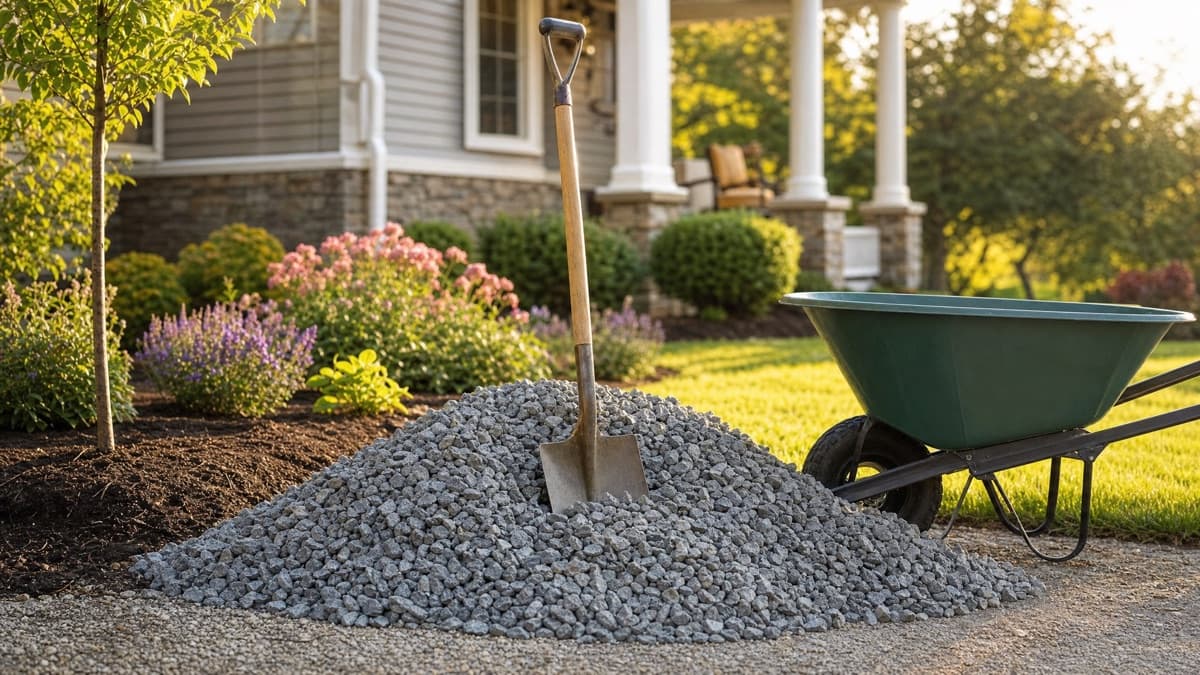
- Crushed stone with fines (the default): CA6, crusher run, road base, 21A, dense-grade. Same idea everywhere: angular stone graded from ~3/4" down to dust, which interlocks into a near-solid mass under compaction while still draining.
- Clean/washed stone (open-graded base): uniform 3/4" angular stone with no fines, used in "permeable" or open-graded installs where water is meant to drain straight through. A legitimate modern method, but it uses different bedding (chip stone, not sand) and edge details. Don't mix methods within one patio.
- What never works: pea gravel, river rock, bare sand bases, or paver-base panels over un-compacted soil. Round stone can't interlock; thick sand ruts.
Compaction: Lifts Matter More Than the Machine
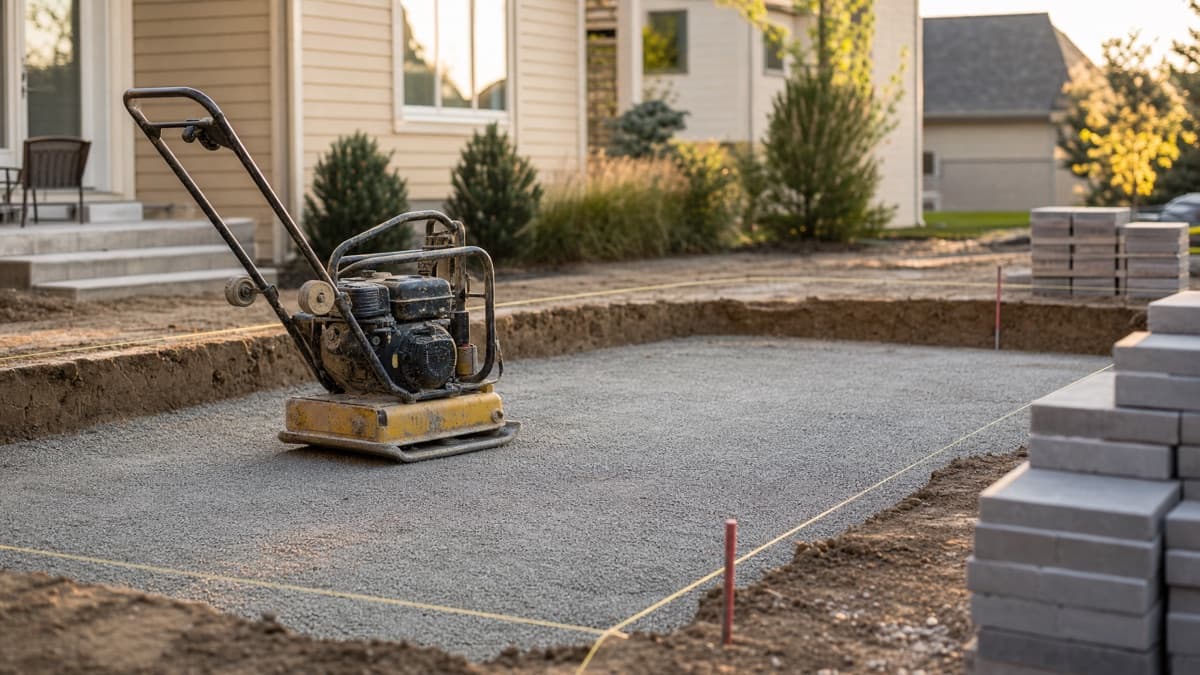
A plate compactor only compacts the top 2-3 inches effectively. That means a 6-inch base dumped in one pour and compacted once is really a compacted crust over loose stone, it will settle. The rule: spread 2-3 inches, compact (2-4 passes, slightly damp material), repeat until at depth. It's the least visible work of the whole project and the single biggest difference between a patio that's flat in ten years and one that waves.
The 6 Mistakes That Sink Patios
- One-pour compaction, compacting 6 inches in a single lift (see above).
- Thick sand to fix a wavy base, sand deeper than an inch ruts under point loads; flatness comes from the base, not the bedding.
- Compacting the bedding sand, it gets screeded loose; the plate compactor seats the pavers into it at the end, through the pavers.
- No edge restraint, the border creeps outward, joints open, and the field unzips.
- Ignoring slope, the finished surface needs about 1/4" per foot of fall away from the house so water leaves instead of living under your patio.
- Skipping fabric on clay, in heavy clay, base stone slowly pumps down into the subgrade with every wet freeze-thaw cycle; fabric stops the mixing.
If you're weighing whether to take this on yourself or price it out, the labor difference is mostly this base work, the honest numbers are in our paver patio cost guide.
Frequently Asked Questions
How deep should a paver base be?
For patios and walkways: 4-6 inches of compacted crushed stone, plus 1 inch of bedding sand. For driveways: 8-12 inches of compacted base. In clay soils or wet sites, use the deep end of each range. Total excavation is base depth + 1 inch of sand + the paver thickness.
What kind of gravel goes under pavers?
Angular crushed stone with fines, sold as CA6 in Illinois, and elsewhere as crusher run, road base, 21A, or dense-grade aggregate. The mix of angular stone and dust locks nearly solid under compaction. Rounded gravel like pea gravel never locks up and should not be used as base.
Should I use sand or limestone screenings for the bedding layer?
Coarse concrete sand is the standard recommended by the paver industry (ICPI). It drains well and lets pavers seat into it. Screenings/stone dust are debated: they compact hard but can hold water against the pavers and turn soupy when saturated. If your installer prefers screenings, that's a regional convention, but sand is the by-the-book answer.
Do I need landscape fabric under a paver base?
Geotextile (woven stabilization fabric, not weed fabric) between the soil and the base is cheap insurance on clay and soft soils, it stops the expensive crushed stone from slowly pumping down into the mud. On well-drained sandy soil it's optional. Under the base, never under the sand.
Why did my pavers sink?
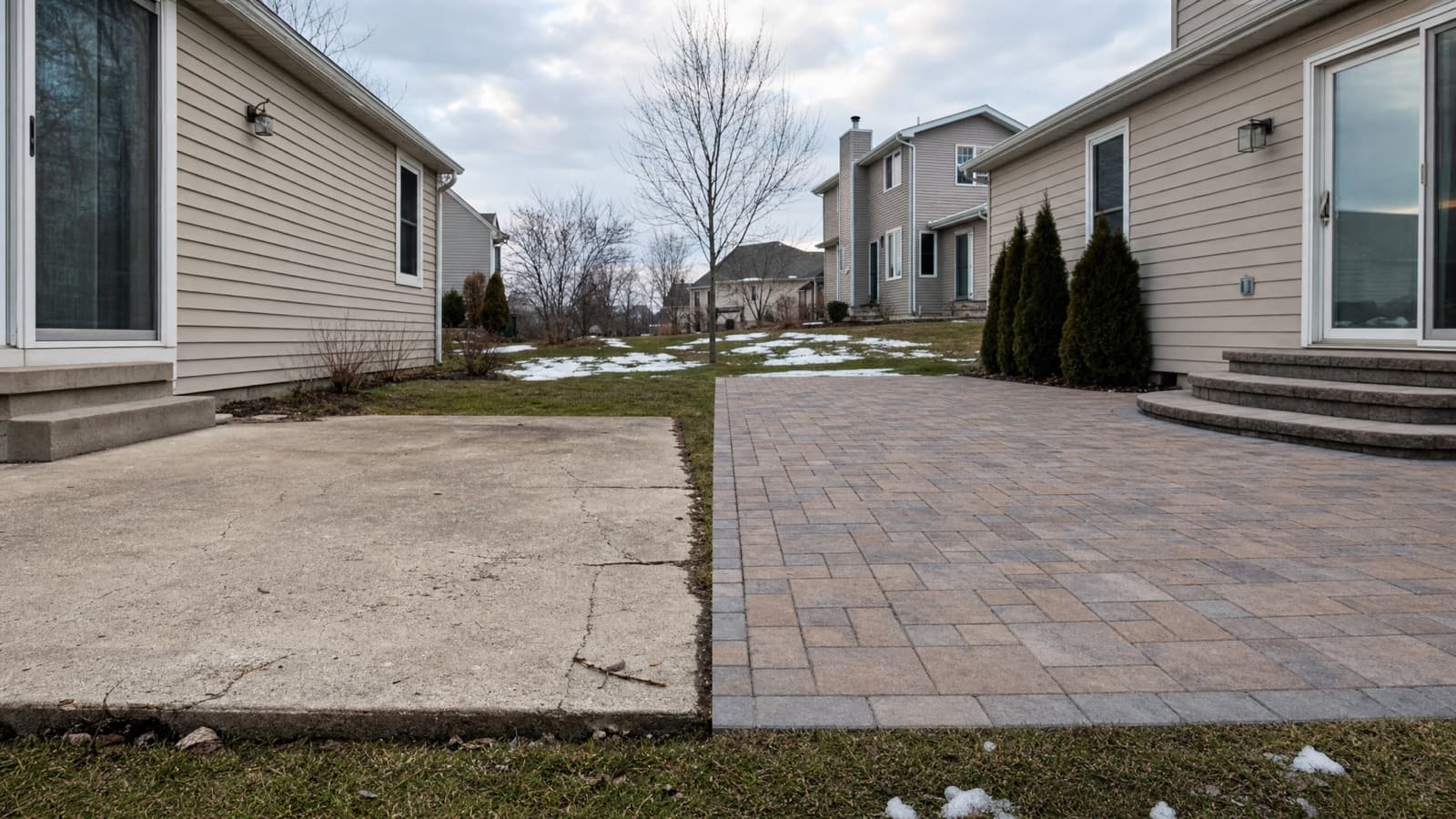
Nine times out of ten: not enough base depth, base not compacted in lifts, or bedding sand thicker than 1 inch. Water finding a home under the patio does the rest each freeze-thaw cycle. Spot-sunk areas can be lifted and re-screeded, one of pavers' genuine advantages over a cracked slab.
Want the Base Done Right the First Time?
Above the Lawn Services installs paver patios and hardscaping across Manhattan, Joliet, New Lenox, Frankfort, and the surrounding Will County, IL area, base depth and compaction spec in writing on every quote. Call (815) 520-2558 or request a free estimate online.
Get a Free Estimate