On this page
When to trim bushes in Illinois depends on when each shrub flowers. Spring bloomers like lilac, forsythia and weigela get trimmed right after their flowers fade. Summer bloomers like smooth and panicle hydrangea, potentilla and Japanese spirea get trimmed in late winter or early spring, and evergreens like yew, juniper and arborvitae get shaped in March or April before new growth starts. The window to avoid for real pruning is late summer through fall, when fresh growth cannot harden off before winter.
The Rule That Matters: When Does It Bloom?
Every shrub in your yard falls into one of three groups, and the group decides the timing.
- Spring bloomers flower on old wood. Lilac, forsythia, spring spirea, weigela, ninebark and viburnum set next year's flower buds the season before. Trim them soon after the flowers fade. University of Illinois Extension notes most spring bloomers are done flowering by the end of June.
- Summer bloomers flower on new wood. Illinois Extension defines them as shrubs that bloom after July 1. Think potentilla, Japanese spirea, rose of sharon, smooth and panicle hydrangea. They grow this year's flowers on this year's stems, so trim them in late winter or early spring.
- Evergreens and foliage shrubs. Yew, boxwood, arborvitae and juniper are shaped before spring growth starts. Burning bush and barberry, grown for leaves and color rather than flowers, are pruned while dormant.
Dead, broken or diseased branches are the exception to every rule. Cut them out whenever you see them.
Why Timing Matters in Will County
The Illinois State Climatologist notes the 2023 USDA hardiness map expanded zone 6a across the Chicago region, from Lake County down to Kankakee County. Milder than it used to be, but every fall still ends in hard freezes. Illinois Extension warns that pruning deciduous shrubs in late summer causes a flush of new growth that cannot harden off before winter, which leaves it open to frost damage and dieback. For evergreens it is blunter: fall pruning is not recommended.
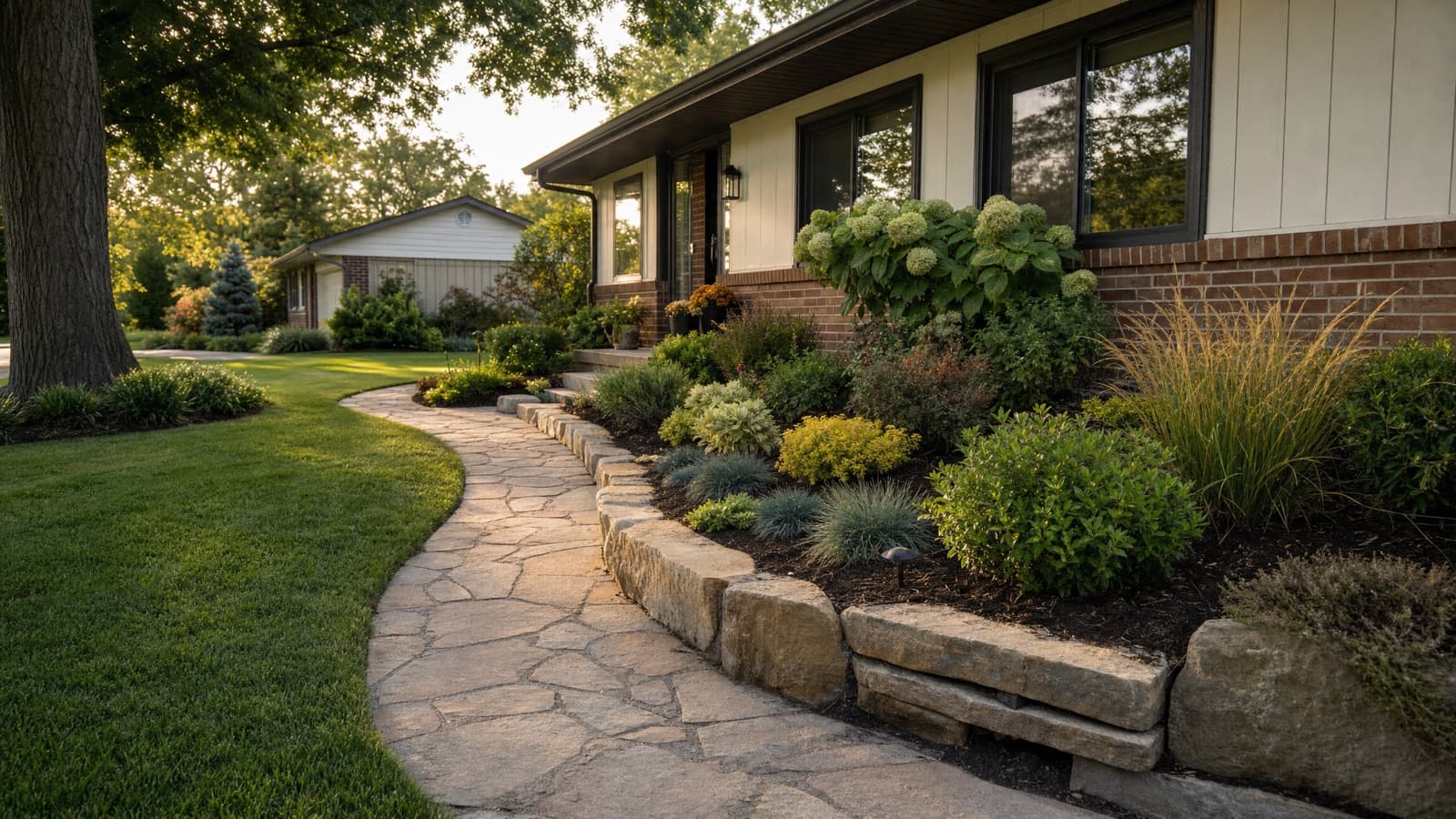
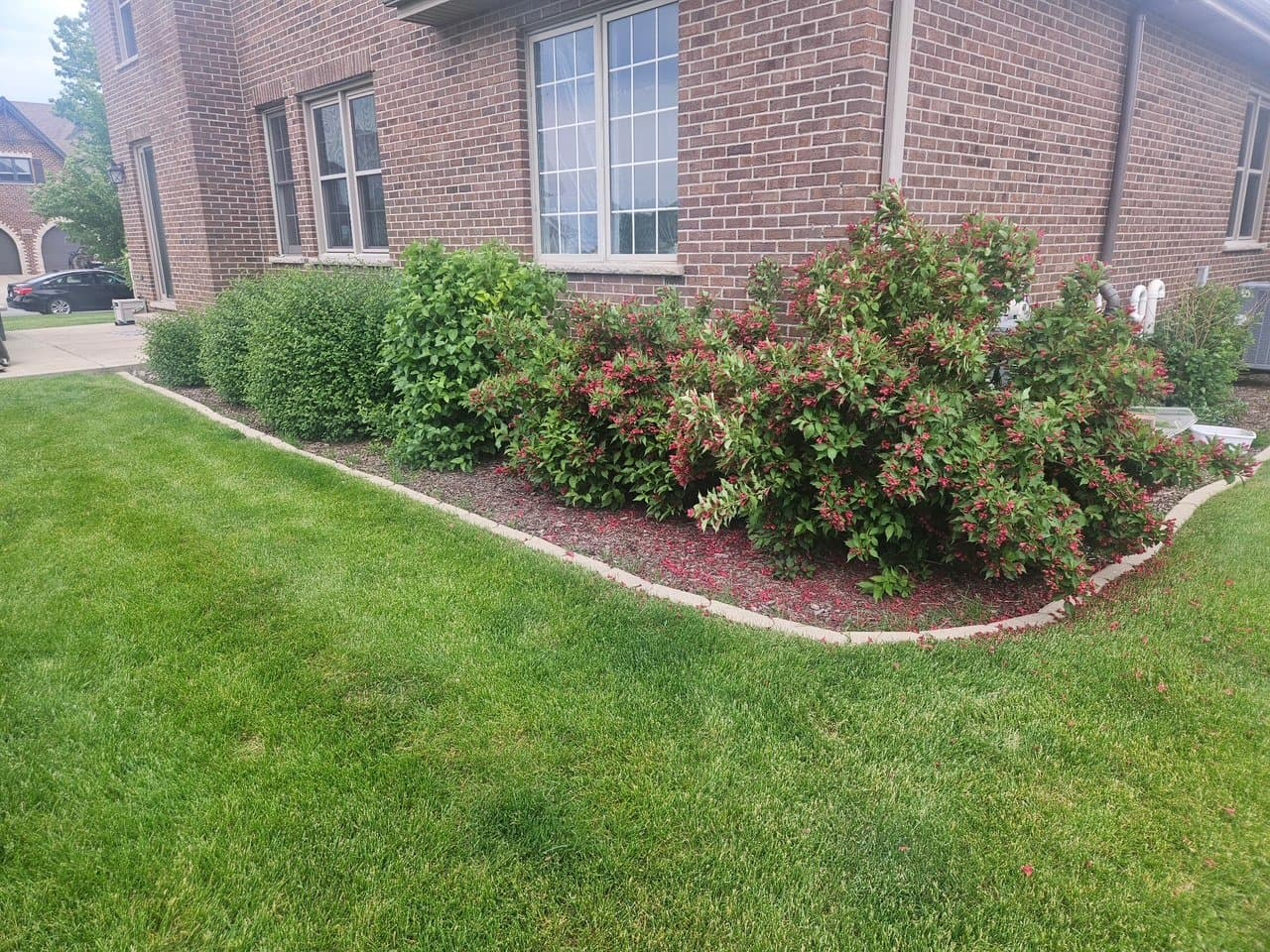
A typical foundation planting in a Manhattan, New Lenox, Frankfort or Mokena subdivision is a mix: yews or boxwood by the door, a burning bush or spirea at the corner, arborvitae on the lot line, a hydrangea or lilac somewhere. That mix is why one trim date per year never suits every shrub in the bed.
Best Time to Trim Bushes, Shrub by Shrub
| Shrub | When to prune | Notes |
|---|---|---|
| Yew | March or April; optional light trim mid-June | Regrows from old wood, takes hard cuts. Nothing after July. |
| Boxwood | March if healthy; after new growth if winter-burned | Light shaping into early summer. No late-season cuts. |
| Arborvitae (incl. Emerald Green) | Spring, around new growth; heavy cuts in early spring | Keep every cut in green foliage. |
| Juniper | March or April, before new growth | Cut at branch forks instead of shearing. No severe cutbacks. |
| Burning bush | Late winter while dormant | Flowers are inconspicuous, so dormant cuts cost nothing. |
| Barberry | Late winter while dormant | Thorny. Wear heavy gloves. |
| Spirea, spring-blooming | Right after flowering | Blooms on old wood. |
| Spirea, summer-blooming (Japanese) | Late winter to early spring | Blooms on new wood; takes a hard cutback. |
| Lilac | Right after flowering | Fall or winter cuts remove next spring's buds. |
| Forsythia | Right after flowering | Can be cut to the ground to renew. |
| Hydrangea, smooth (round white heads) | Late winter to early spring | Can go to the ground in March or early April. |
| Hydrangea, panicle (cone-shaped heads) | Late winter to early spring | Remove up to a third to a half of the shrub. |
| Hydrangea, bigleaf (blue or pink) | Spring, once leaves show | Cut dead stems only. |
| Potentilla | Late winter to early spring | Blooms on new wood. |
| Privet | Spring after new growth expands, or after flowering | Tolerates a cut to the ground. |
| Red-twig dogwood | Late winter | Renewal cuts push new stems. Never shear. |
| Rose of sharon | Late winter to early spring | Blooms on new wood. |
| Weigela | Right after flowering | Blooms mostly on old wood. |
| Ninebark | Right after flowering | Prune while dormant instead if you want the seed pods. |
Compiled from The Morton Arboretum, University of Illinois, Iowa State, Wisconsin and Purdue Extension guidance listed under Sources.
Trimming Evergreen Bushes: Yews, Boxwood, Arborvitae, Junipers
The Morton Arboretum's rule for most evergreens is to prune just before spring growth begins and to avoid late summer and fall. Shearing makes the outer foliage denser, which shades the inside and grows a "dead zone" of bare wood that will not resprout. Each evergreen handles that differently.
When to prune yews
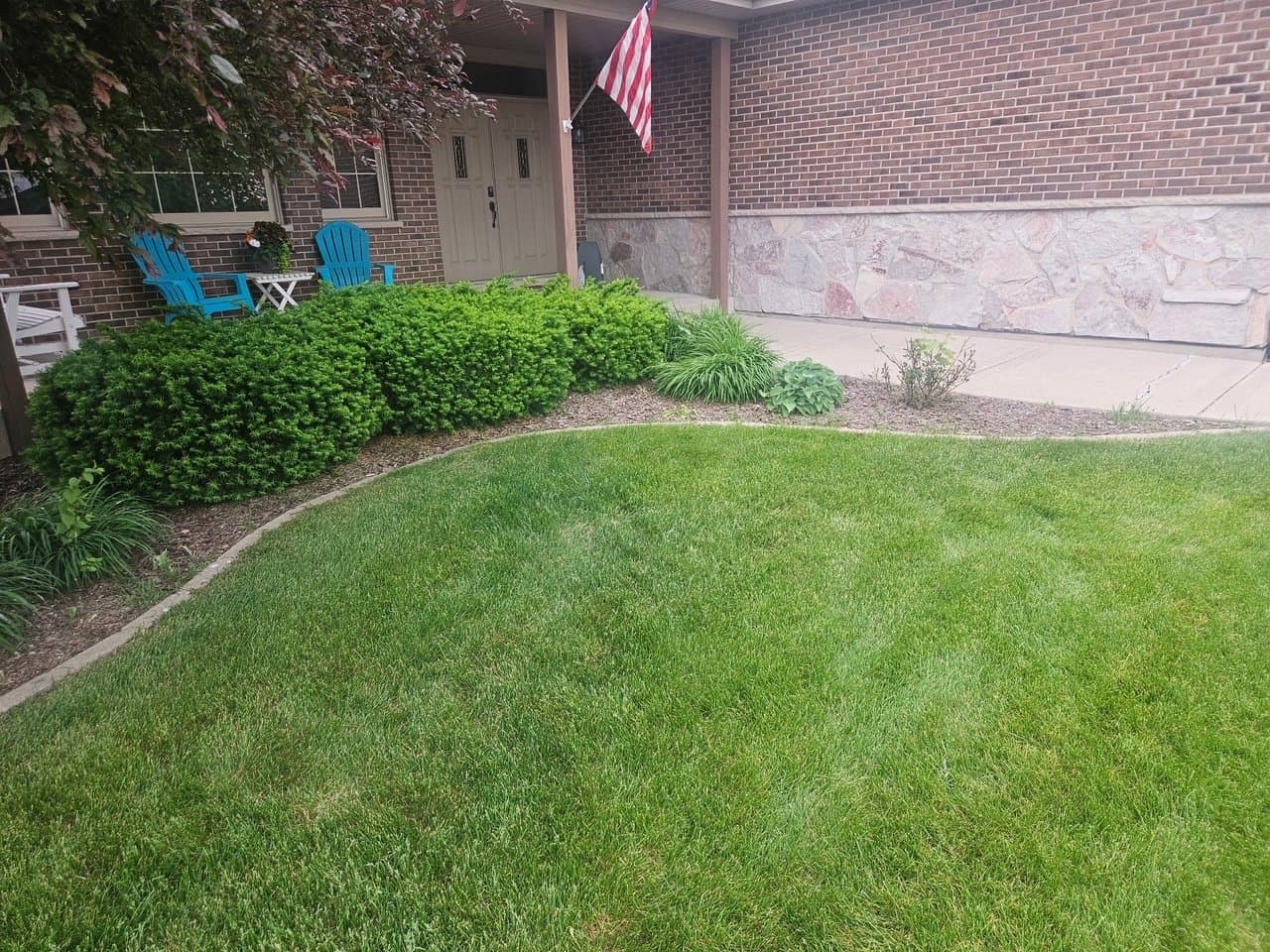
Late winter or early spring, then an optional light trim in mid-June, and nothing after July. Yews sprout from old wood, so an overgrown yew can be cut back hard. Penn State Extension notes that yew foliage and berries are poisonous to people and pets, so clean up every clipping.
When to trim boxwoods
Chicago Botanic Garden says March is fine for healthy boxwood. If winter left brown foliage, wait for new growth, then cut out the browned branches. Light shaping can continue into early summer.
Emerald Green arborvitae pruning
Can arborvitae be pruned? Yes, and Morton notes it responds well because new shoots grow from hidden buds in the branch crotches. The catch is the brown interior: Penn State Extension says that among these evergreens only yews have dormant buds on old wood. Keep cuts in the green. Morton lists Emerald Green at 10 to 15 feet tall and 3 to 4 feet wide, so one planted under a window is a lifelong fight. If it has outgrown its spot by several feet, removing and replacing it usually beats hacking it into bare wood.
Junipers
Prune in March or April. Morton recommends against severe pruning and suggests cutting at the V-shaped forks where branches split. Tip-pruning keeps the feathery look that shearing destroys.
Cutting Back Hydrangeas (and Why Bigleaf Is Different)
Trimming hydrangeas starts with knowing which kind you have.
- Smooth hydrangea (round white heads, the classic Annabelle type) blooms on new wood. Iowa State Extension says it can be cut to the ground in March or early April.
- Panicle hydrangea (cone-shaped flower heads) also blooms on new wood. Illinois Extension says you can remove a third to half of the shrub in late winter or early spring.
- Bigleaf hydrangea (the blue or pink mopheads) is the tricky one, and big leaf hydrangea pruning mostly means not pruning. Older varieties bloom only on last year's stems, and Iowa State notes they often die back to the ground in Iowa winters. Newer reblooming varieties also flower on new growth. Wait until leaves emerge in spring, then cut out only the dead stems.
- Oakleaf hydrangea blooms on old wood and needs little pruning. Trim right after flowering if at all.
What about cutting back hydrangeas in fall? Wisconsin Extension lists fall, once dormant, as an option for smooth hydrangea and a light fall trim for panicle types. Never cut a bigleaf down in fall.
Can I Trim My Lilac Bush in the Fall?
Not if you want flowers next spring. Lilacs set next year's flower buds the season before, and Illinois Extension warns that pruning spring bloomers in late summer, fall or winter removes those buds. Trim your lilac as soon as the flowers fade. In fall, limit yourself to dead or broken branches.
An old lilac that has grown into a tree-shaped tangle can be renewed by removing a third of the oldest stems each year for three years. Cutting every stem to the ground also works, but Illinois Extension notes a lilac may not bloom for several years afterward.
Month-by-Month Shrub Calendar for Northern Illinois
| Month | Prune now | Leave alone |
|---|---|---|
| January | Dead or broken branches only | Snow-bent evergreens: let the snow melt, do not shake |
| February | Summer bloomers, burning bush, barberry, dogwood; renewal and hard cutbacks | Spring bloomers |
| March | Yews, junipers, boxwood, arborvitae before new growth; smooth hydrangeas | Spring bloomers; bigleaf hydrangea |
| April | Finish evergreens before new growth; forsythia as soon as it finishes blooming | Bigleaf hydrangea until leaves show |
| May | Lilac, spring spirea and weigela as flowers fade; dead bigleaf stems; privet; start shaping hedges | Live bigleaf hydrangea stems |
| June | Finish spring bloomers; optional light yew trim; hedge touch-ups | Heavy cuts on evergreens |
| July | Last light trims on yews and hedges | Anything heavy |
| August to September | Dead or broken wood only | Everything else: new growth will not harden off |
| October | Dead, broken or diseased wood | Evergreens and spring bloomers |
| November | Summer bloomers that have dropped their leaves, if you cannot wait for late winter | Evergreens and spring bloomers |
| December | Loosely tie upright arborvitae before heavy snow | Pruning |
Bloom dates shift with the weather. Go by when the flowers fade, not the calendar.
Fall is still busy, just not for pruning. It is the season for leaves, bed cleanup and fall cleanup. For the lawn side of the year, see our Illinois lawn maintenance schedule.
Bringing Back Overgrown Shrubs: Renewal and Hard Cutbacks
Builder foundation plantings that went in 20 or 30 years ago are often over the windows now. Most deciduous shrubs can be brought back, and the timing for big cuts is late winter or early spring.
- Renewal pruning (the one-third rule). Each year, cut about a third of the oldest, thickest stems at ground level. With 12 stems, that is four a year for three years, and by the end no stem is more than three years old. You keep a shrub in the bed the whole time.
- Rejuvenation (the hard cutback). Cut every stem to 4 to 6 inches in early spring, then thin the new shoots the next year. Illinois Extension names red-twig dogwood, spirea and flowering quince as good candidates; Purdue adds forsythia, rose of sharon, privet and lilac. Expect fewer flowers for a few years.
- Evergreens are different. Yews can be cut back hard. Junipers and arborvitae cannot: cut into the brown interior and it stays bare.
Some shrubs are past saving: hollow arborvitae, junipers that are mostly dead wood, or a shrub that will always outgrow its spot. That is when bush removal and a bed renovation with plants sized for the space make more sense than another cutback.
How to Trim Hedges So They Stay Full
- Wider at the bottom. Penn State Extension recommends shaping hedges like an inverted V so sunlight reaches the lower branches. A hedge wider on top goes bare at the base.
- Shears for hedges only. Illinois Extension says most shrubs should not be sheared; save it for formal hedges like yew, boxwood and arborvitae. Everything else gets hand-pruner cuts.
- Open them up. Closely sheared yews need thinning every few years so light reaches the center.
Rather not own a hedge trimmer? Bush and hedge trimming is quoted free from a photo, with clippings hauled away.
Do Not Do This: Shrub Pruning Mistakes
- Pruning spring bloomers in fall or winter. You are cutting off next spring's flowers.
- A heavy trim in August or September. Tender regrowth goes into winter unhardened.
- Shearing every shrub into a ball. It thickens the shell and leaves a bare interior.
- Cutting arborvitae or juniper into brown wood. It will not fill back in.
- Cutting bigleaf hydrangea to the ground in fall. Wait for spring leaves and remove dead stems only.
- Pruning yews after July. Late growth gets damaged in winter.
- Shaking snow or ice off frozen branches. Morton notes cold wood is brittle. Let it melt, then prune any breaks.
- Carrying disease shrub to shrub. Illinois Extension suggests cleaning blades between plants with 70% isopropyl alcohol or a 10% bleach solution.
Frequently Asked Questions
Can you trim bushes in winter?
Yes, late winter is the main pruning window for most deciduous shrubs. Summer bloomers like potentilla, Japanese spirea, rose of sharon and smooth or panicle hydrangea, plus renewal cuts on overgrown shrubs, belong in late winter, roughly February into March. The exceptions are spring bloomers such as lilac and forsythia, whose flower buds are already set, so cutting them in winter costs you flowers.
When should I trim boxwoods?
In March if the plants came through winter healthy. If they show browned, winter-burned foliage, wait until new growth appears in spring, then cut out the brown branches. Light shaping in early summer is fine. Skip late summer and fall, when fresh growth will not have time to harden before winter.
When should I prune yews?
In late winter or early spring before new growth starts, which in northern Illinois means March or April. Yews push a second flush of growth, so a light second trim around mid-June is fine. Do not prune them after July. Yews are the one common evergreen that regrows from old wood, so an overgrown yew can usually be cut back hard.
Can arborvitae be pruned?
Yes. Arborvitae, including Emerald Green, takes trimming well as long as every cut stays in green foliage. Trim in spring around the time new growth starts, and do any heavier cutting in early spring before growth begins. Do not cut into the brown, bare interior, because that wood will not grow back.
Is it too late to trim bushes in the fall?
For heavy pruning, yes. Late-summer and fall cuts push new growth that does not harden off before winter, evergreens should not be pruned in fall, and spring bloomers would lose next year's flowers. Dead, broken or diseased branches can come out any time, and summer bloomers that have dropped their leaves can be cut back. Save real shaping for late winter or spring.
Who trims bushes near Manhattan, Illinois?
Above the Lawn Services, founded by Jake Bogda, trims shrubs, hedges and foundation plantings in Manhattan, New Lenox, Frankfort and Mokena. Quotes are free and priced by the shrub count, and clippings are hauled away. Call or text a photo to (815) 520-2558 and Jake will tell you which shrubs to trim now and which to leave.
Sources
- University of Illinois Extension: Dormant Season Tree and Shrub Pruning
- University of Illinois Extension: How to prune flowering shrubs for more blooms
- University of Illinois Extension: How to properly prune hydrangeas
- The Morton Arboretum: Pruning Deciduous Shrubs by species
- The Morton Arboretum: How to Prune Evergreen Trees and Shrubs
- The Morton Arboretum: Eastern arborvitae
- The Morton Arboretum: Help Plants Handle Winter
- Purdue Extension: Some Shrubs Best Pruned After Flowering
- Purdue Extension: Renewal pruning has immediate, delayed rewards
- Iowa State Extension: When should I prune my shrubs?
- Iowa State Extension: How should I prune my hydrangeas?
- University of Wisconsin Extension: Deciduous Shrub Pruning Chart
- Penn State Extension: Pruning Needled Evergreens
- Chicago Botanic Garden: Pruning Evergreen Hedges
- Illinois State Climatologist: New USDA plant hardiness zones map
Want Your Shrubs Trimmed at the Right Time?
Above the Lawn Services does bush and hedge trimming in Manhattan, New Lenox, Frankfort and Mokena, IL. Quotes are free and priced by the shrub count; a front foundation planting of under ten shrubs is the low end. Call or text a photo to (815) 520-2558 and Jake will tell you which shrubs to trim now and which to leave for spring. If a shrub is past saving, ask about bush removal.
Get a Free Estimate