On this page
The best landscape edging for an Illinois yard depends on what the bed holds and how long you want the edge to last. Poured concrete curbing is the most permanent choice and holds rock with no gaps. Steel gives a thin, long-lasting line you can install yourself. Pavers or brick give a classic look that shifts with frost instead of cracking, and a spade-cut edge costs nothing but needs recutting every year. Plastic is the cheapest to buy and the most likely to work loose in our freeze-thaw winters.
Jake Bogda, who runs Above the Lawn Services in Manhattan, IL, says most homeowners he meets know plastic, metal, pavers or a spade-cut edge, and don't realize a poured concrete curb is an option until they see one in their neighborhood. This guide puts all of them side by side, downsides included, so you can pick the right edge for your beds.
Landscape Edging Types Compared
Here is how each common edging handles the things that matter in a Will County yard: frost, mowing and whether the bed is rock or mulch.
| Edging | Look | Freeze-thaw | Mowing | Rock or mulch |
|---|---|---|---|---|
| Poured concrete curb | Continuous, solid border; plain, colored or stamped | Heavy, so it rarely rides up like a strip; can crack when frost or settling moves the ground | A mow-strip profile lets a mower wheel run along it | Holds both; no gaps for rock or runners |
| Steel or aluminum | Thin, crisp line you barely see | Long lasting, but steel can heave without stakes or a lip | Trim along it unless set nearly flush | Good for rock if at least 6 in deep |
| Plastic | Rolled top; can look artificial | Light and shallow, so it is the most prone to heaving | Rolled top needs trimming every mow | Mulch, if staked well; rock needs 6 in or deeper |
| Pavers or brick | Classic, segmented | Pieces shift instead of cracking; may need resetting | Set flush, the mower rides over | Open joints let grass runners and weeds in |
| Wood or cedar | Rustic, natural | Rots over time; cedar and pine need sealing | Timbers make a decent mowing edge | Gaps let runners through |
| Spade-cut edge | Clean trench, no material | Nothing to heave | Mower rides right over it | Mulch only; rock needs a real border |
| Edging | Typical cost per foot | DIY friendly? | Best use |
|---|---|---|---|
| Poured concrete curb | $3.50 to $17 installed (plain); $5 to $18.50 stamped | No, it takes a curbing machine | Permanent beds, rock beds, curb appeal |
| Steel or aluminum | $2 to $6, materials only | Yes, but hard to get right | A thin modern line; spots that need side strength |
| Plastic | $0.50 to $3, materials only | Yes, the easiest | Small beds on a tight budget |
| Brick | $1.50 to $5.50, materials only | Yes, with patience | Matching brick or pavers on the house |
| Wood | $4 to $9, materials only | Yes | A rustic or natural look |
| Spade-cut edge | No materials, just your time | Yes | New beds you may still reshape |
Typical national ranges from HomeGuide, not Above the Lawn prices. Materials-only ranges exclude labor, which HomeGuide lists at $1.50 to $10 per linear foot.
For a whole curbing job, HomeAdvisor puts the normal range at $784 to $2,162. Jake prices concrete edging by the foot after an on-site measurement, and our concrete curbing cost guide covers what to compare between quotes.
Poured Concrete Curbing: The Most Permanent Landscape Edging
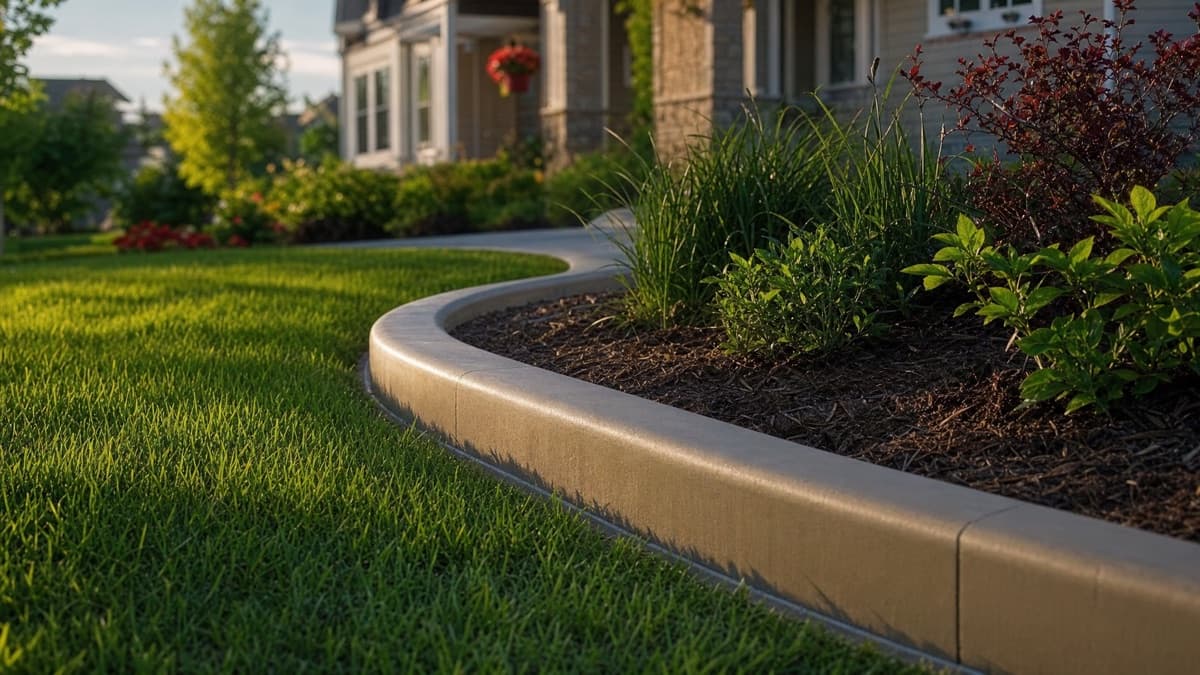
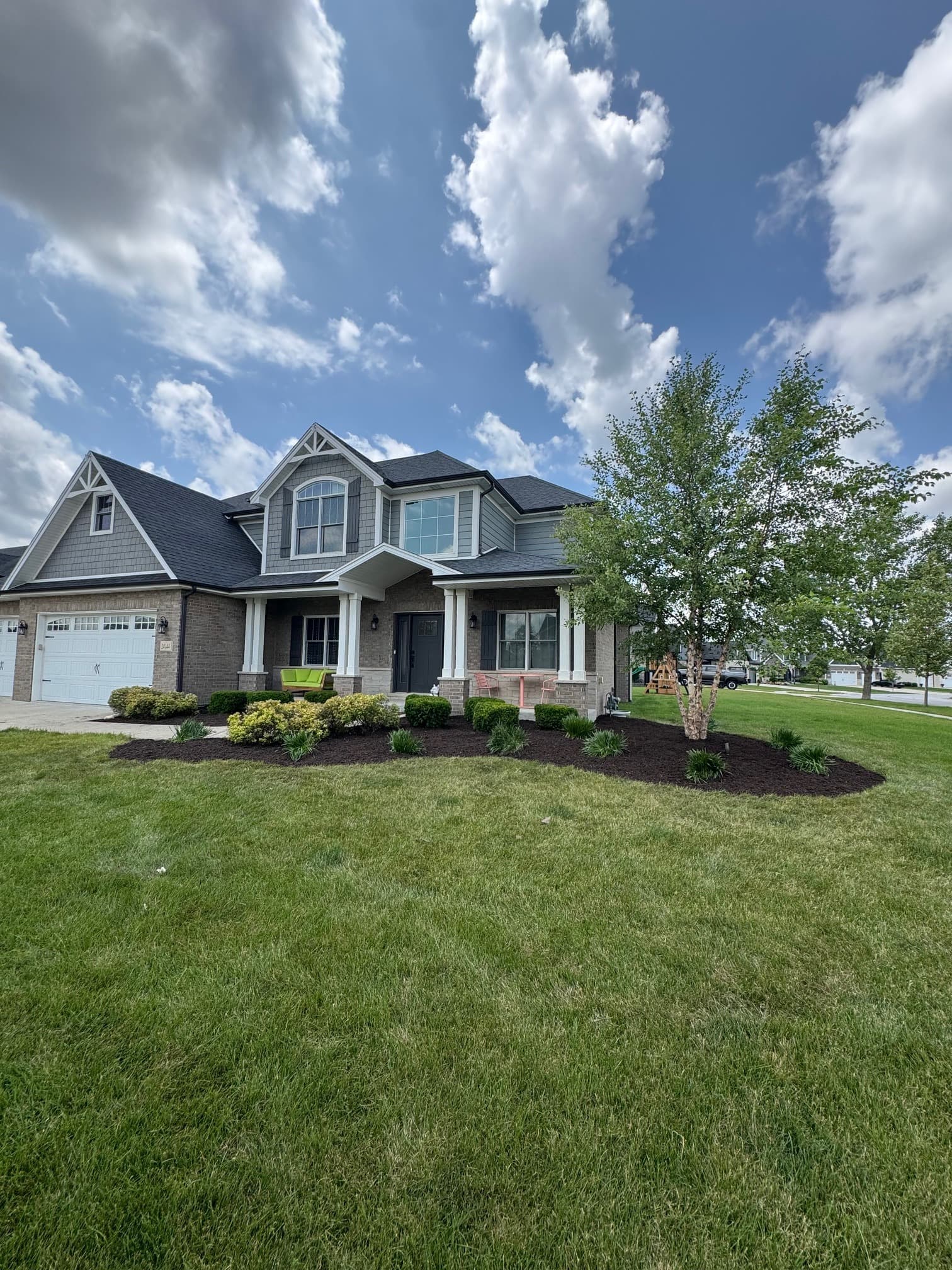
A concrete curb is extruded on site by a curbing machine into one continuous border that follows your bed line, curves and tree rings included. With no seams, it is one of the strongest edges for a rock bed, and HomeGuide and HomeAdvisor both put typical concrete edging lifespan at 10 to 30 years.
Jake pours plain, colored and stamped profiles, plus a mow-strip edge, which HomeGuide describes as curbing set lower on one side so the mower can run along it. An optional LED strip can go on the house side of the curb so the bed glows after dark. See the styles on our concrete curbing page.
The honest downsides:
- It is permanent. Illinois Extension cautions against locking in a bed edge too early, because beds grow as plants fill in. On a renovation, Jake reshapes the bed first, often bigger, and the curb goes in last.
- It can crack. Instead of riding up like plastic, concrete pushed by frost or settling soil tends to crack. Control joints help manage where, but nobody can promise a crack-free curb.
- It costs more up front. Installed poured concrete runs about $3.50 to $17 per foot nationally, against $0.50 to $3 per foot for plastic you put in yourself.
- It is not DIY. Illinois Extension notes continuous concrete edging is poured by special machines.
- It does not stop seeds. Grass and weeds still blow in as seed with any edging, Ask Extension notes, so beds still need weeding.
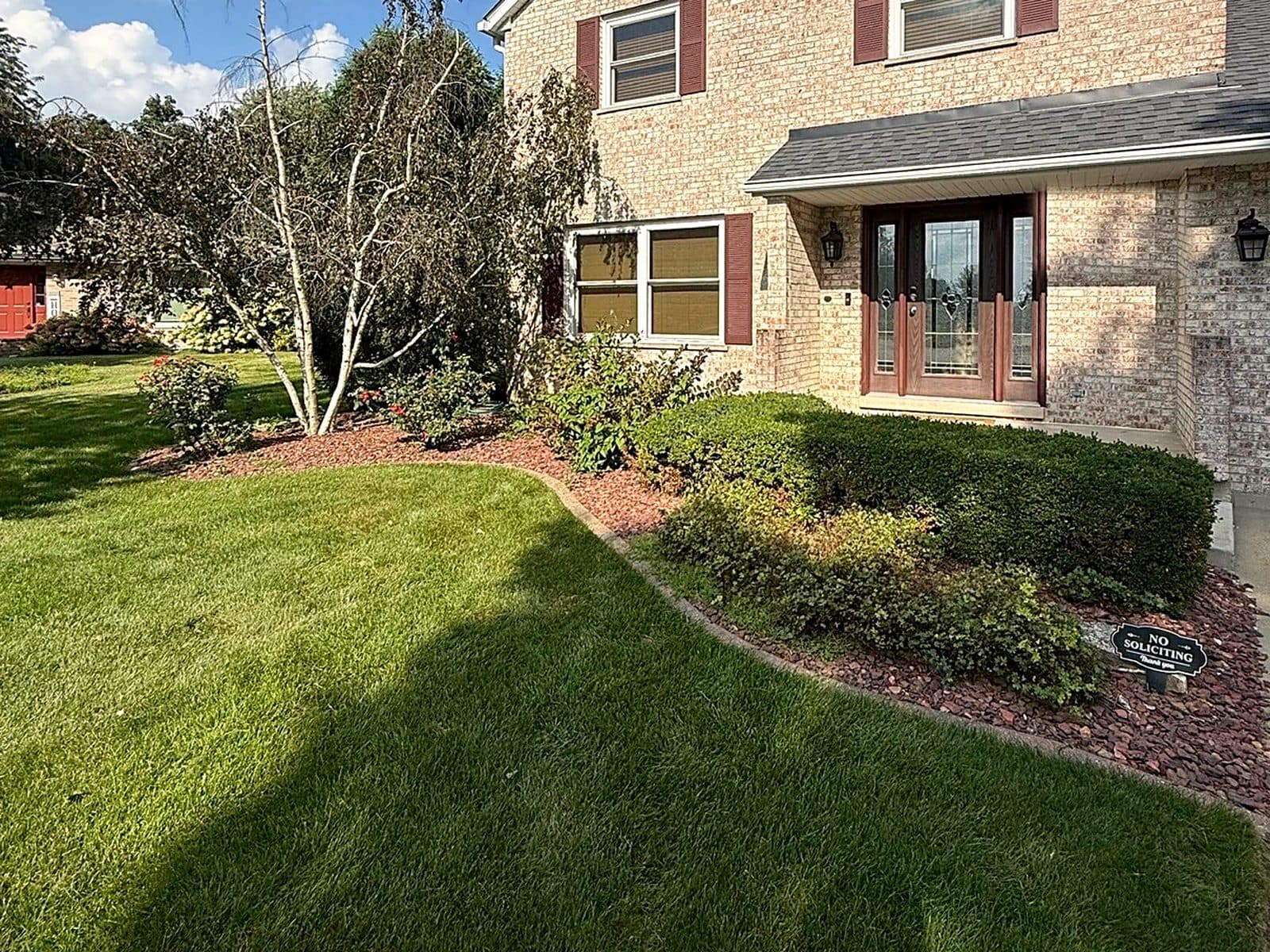 Before
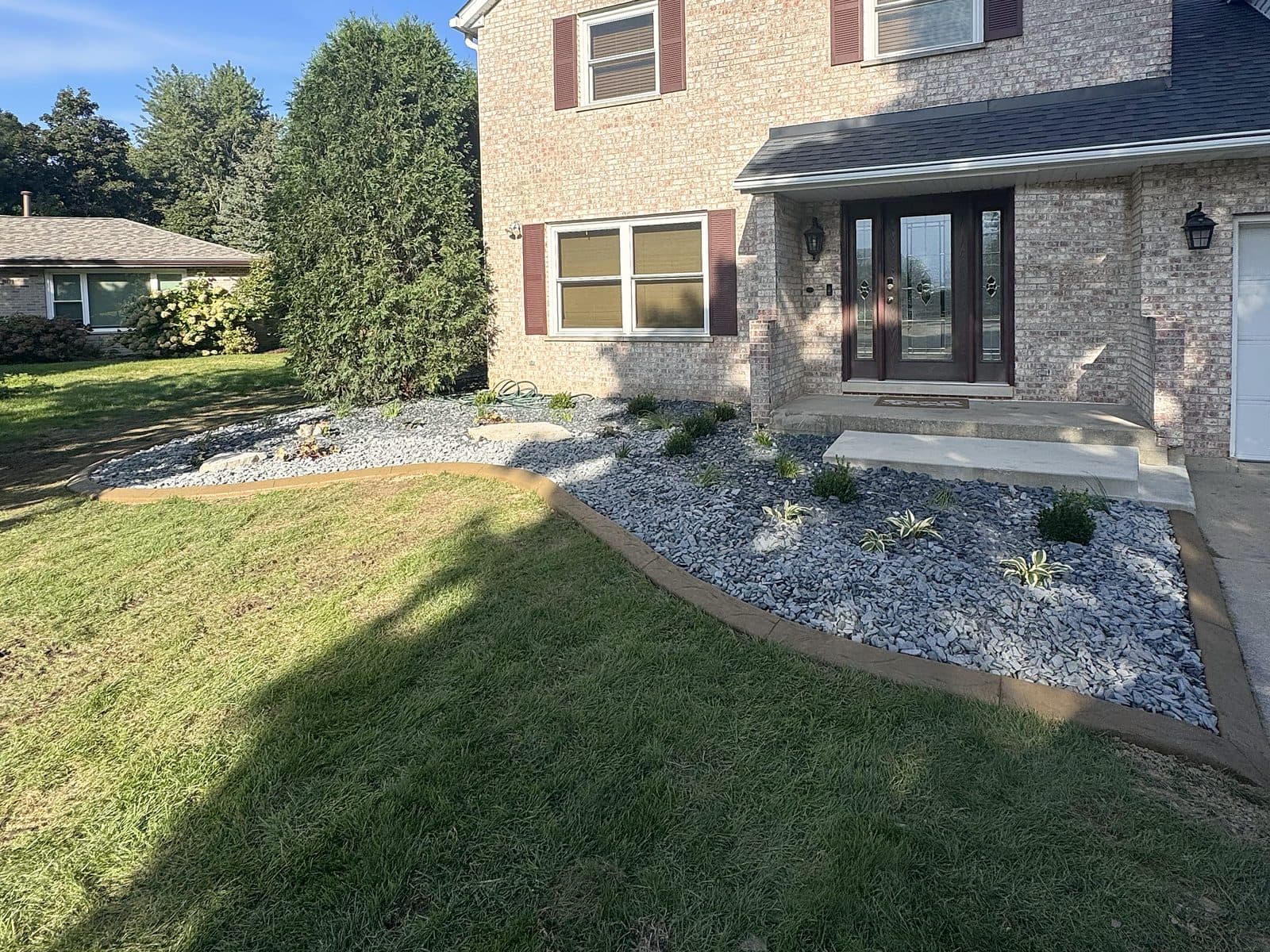 After
Metal Landscape Edging: Steel and Aluminum
Steel edging is a thin staked strip that leaves a crisp line you barely notice. University of Illinois Extension calls metal the longest-lasting edging, but says steel is relatively expensive, hard to install properly and prone to frost heaving unless you use a grooved or lip-style edge with steel anchoring stakes. Aluminum is easier to work with, though its silver color can look out of place.
HomeGuide lists metal edging at $2 to $6 per foot for materials and warns uncoated metal may rust. For rock, a Colorado Master Gardener on Ask Extension picked steel at least 6 inches deep as the best way to keep lawn runners out. Unless it is set nearly flush, plan on a trimmer pass along it.
Concrete Edging vs Metal Edging
- Choose steel for a nearly invisible line, a modern look or a lower materials bill, if you will dig it in deep and stake it well.
- Choose concrete if the bed holds rock, you want a wider decorative border, or you want a mow strip so the lawn edge needs less trimming.
- Know the failure modes. Steel can heave if it is not anchored. Concrete usually fails by cracking rather than lifting, and it is much harder to relocate.
Plastic Landscape Edging Problems
Plastic is the most common edging homeowners install because it is cheap, $0.50 to $3 per foot for materials (HomeGuide), and no-dig kits make it a quick DIY job. The problems show up later:
- It will not stay put. Illinois Extension calls plastic probably the hardest edging to keep stable and describes “the frustration of plastic edging that simply will not stay in the ground.”
- It needs trimming every mow. The rolled top sticks up, so the grass beside it needs a string trimmer each time (Ask Extension).
- Sun and roots wear it out. It can deteriorate in sun, and HomeGuide says it is not heavy enough to keep plants from growing underneath and lifting it.
If plastic still fits your budget, Extension advises a round-top edging over a flat one (flat types sink more easily), a grooved or lip-style edge and steel stakes. Set it 4 to 6 inches deep.
Why Plastic Edging Heaves in Illinois Winters
Our winters freeze and thaw the ground over and over. Purdue Extension explains that each cycle makes water in the soil expand and contract, pushing bulbs and perennials toward the surface, and that waterlogged or poorly drained soils are hit hardest. Chicago Botanic Garden adds that heaving is worse without snow cover. Beds on heavy clay are in that worst-case group, since University of Illinois Extension notes clay holds water and stays wet longer than other soils.
Plastic edging is light and usually set shallow, so frost lifts it and roots push in underneath. By April it is often riding high, leaning or popped out in sections. Steel can heave too, and pavers can shift; the fix for all of them is to go deeper, anchor it or use something heavy. If you reset the same plastic every spring, that is the material, not you. A lot of builder landscaping around here is 20 to 30 years old now, and its edging has been through every one of those winters.
Paver and Brick Edging
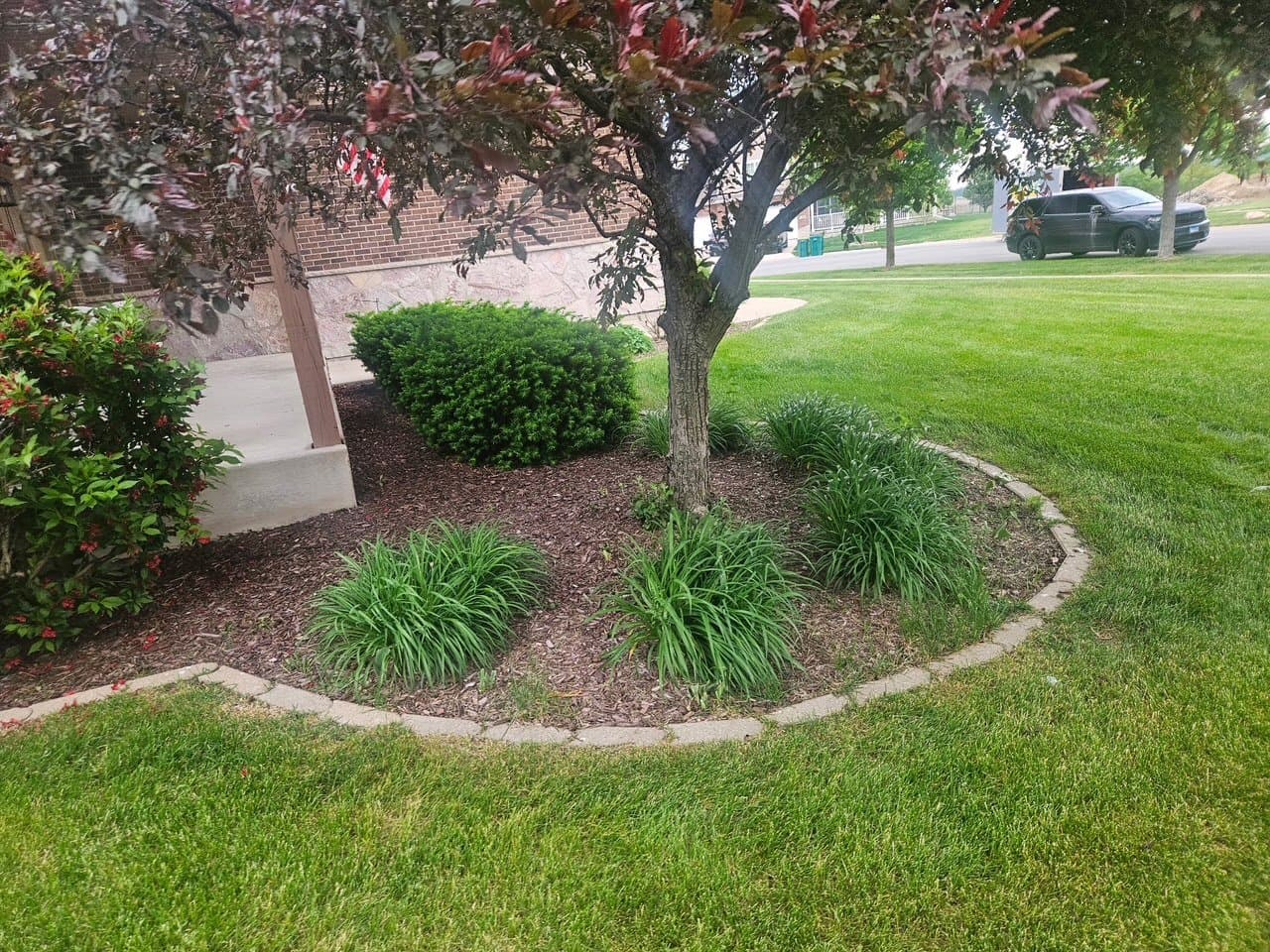
A row of pavers or brick gives a classic look and can tie a bed to brick on the house. Each piece moves on its own, so segmented edging shifts with frost rather than cracking. HomeGuide and HomeAdvisor note pieces can shift over time and need upkeep, though single pieces are easy to reset. HomeGuide lists brick edging at $1.50 to $5.50 per foot for materials.
The tradeoffs: Ask Extension notes the gaps eventually grow grass and weeds, and a Colorado Master Gardener calls unmortared pavers a poor choice next to rock because runners slip through the joints. The upside is mowing, since pavers set level with the lawn let the mower ride right over them. Jake has used paver bullet edging on bed renovations, like a New Lenox teardown that ended with a bigger bed, low-maintenance plants, rock and light gray paver edging.
Wood, Cedar and Spade-Cut Edges
Wood and cedar edging looks natural, and Illinois Extension says landscape timbers stay in place well and make a nice mowing edge. Wood rots over time, though, and HomeAdvisor says cedar and pine need sealing every three to five years. HomeGuide lists wood at $4 to $9 per foot for materials. Skip old railroad ties; Extension warns their coatings can be toxic to plants.
A spade-cut edge is a small trench cut straight down between lawn and bed. It is the cheapest edge there is and, per Ask Extension, potentially the easiest to mow. Illinois Extension says a cut 4 inches deep and wide easily contains bluegrass, but lawn grass grows 3 to 4 inches into beds a year, so it needs recutting once or twice a season. It is the smart choice for a bed you may still enlarge. Our mulch installation includes weeding and edging the beds.
Best Landscape Edging for Rocks vs Mulch
What the bed holds matters as much as the look. Rock is heavy and loose: it gets kicked into the lawn, finds every gap, and lawn runners that reach the soil under it take root. Mulch is lighter and more forgiving.
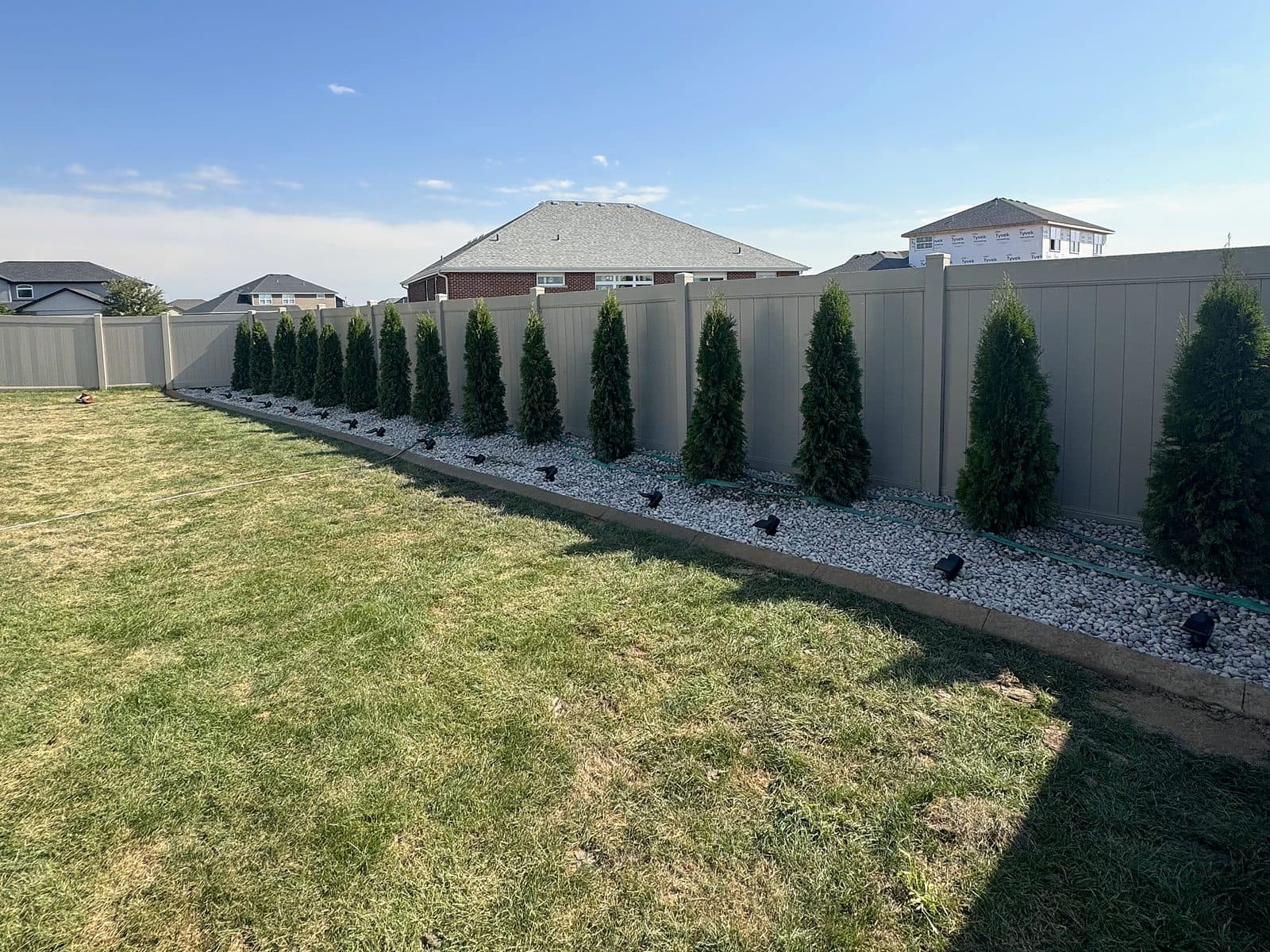
- For rock, use a continuous edge with no open joints: poured concrete, or steel at least 6 inches deep. Mortared masonry works too, at a higher cost.
- For mulch, almost any edge works, including a spade cut. Illinois Extension suggests leaving a little bare soil at the lawn edge when you mulch so touch-up edging stays easy.
Still deciding what goes in the bed? Our rock vs mulch guide compares the two, and our rock landscaping service covers black, gray, white and blue-gray rock beds.
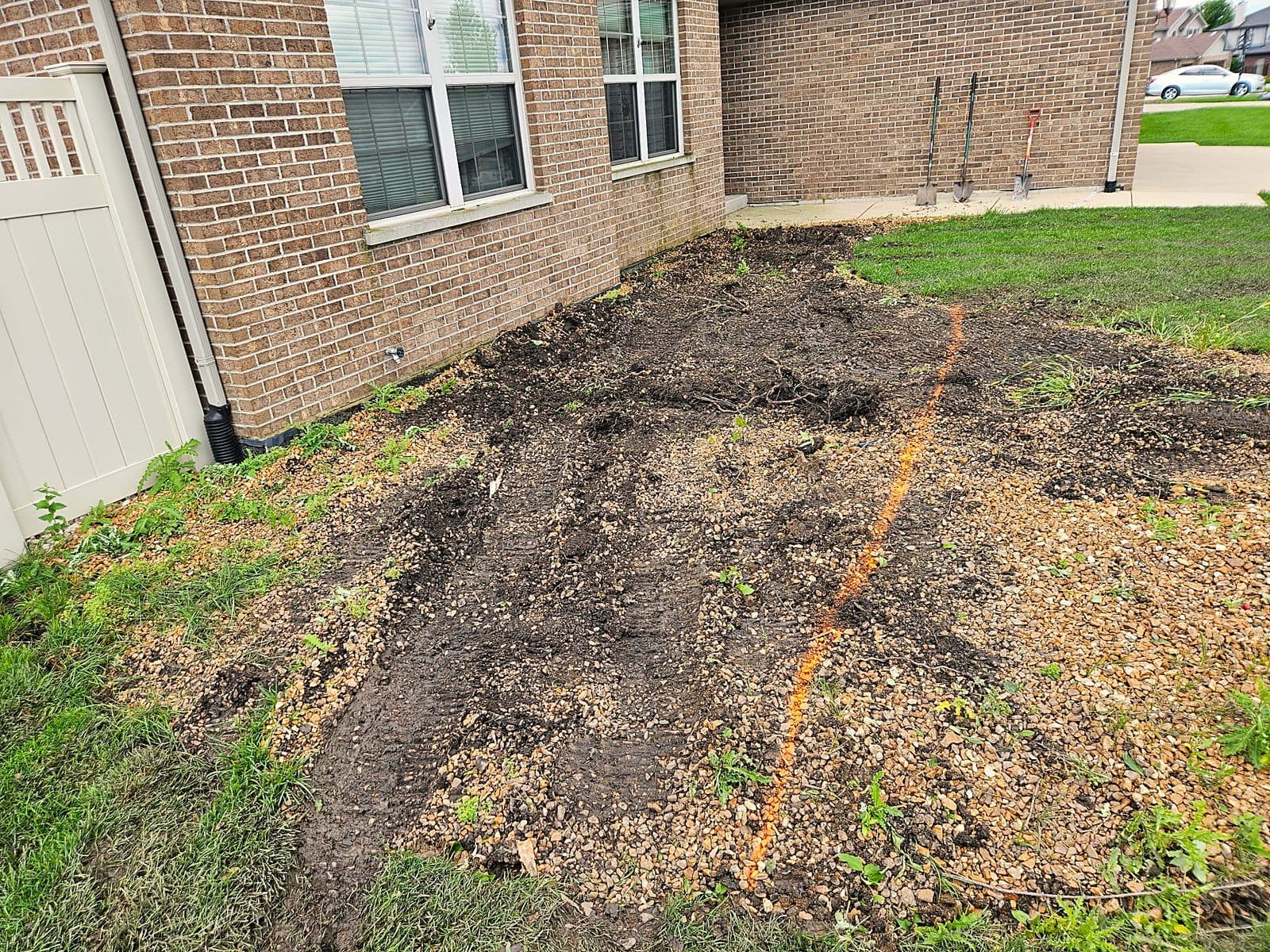 Before
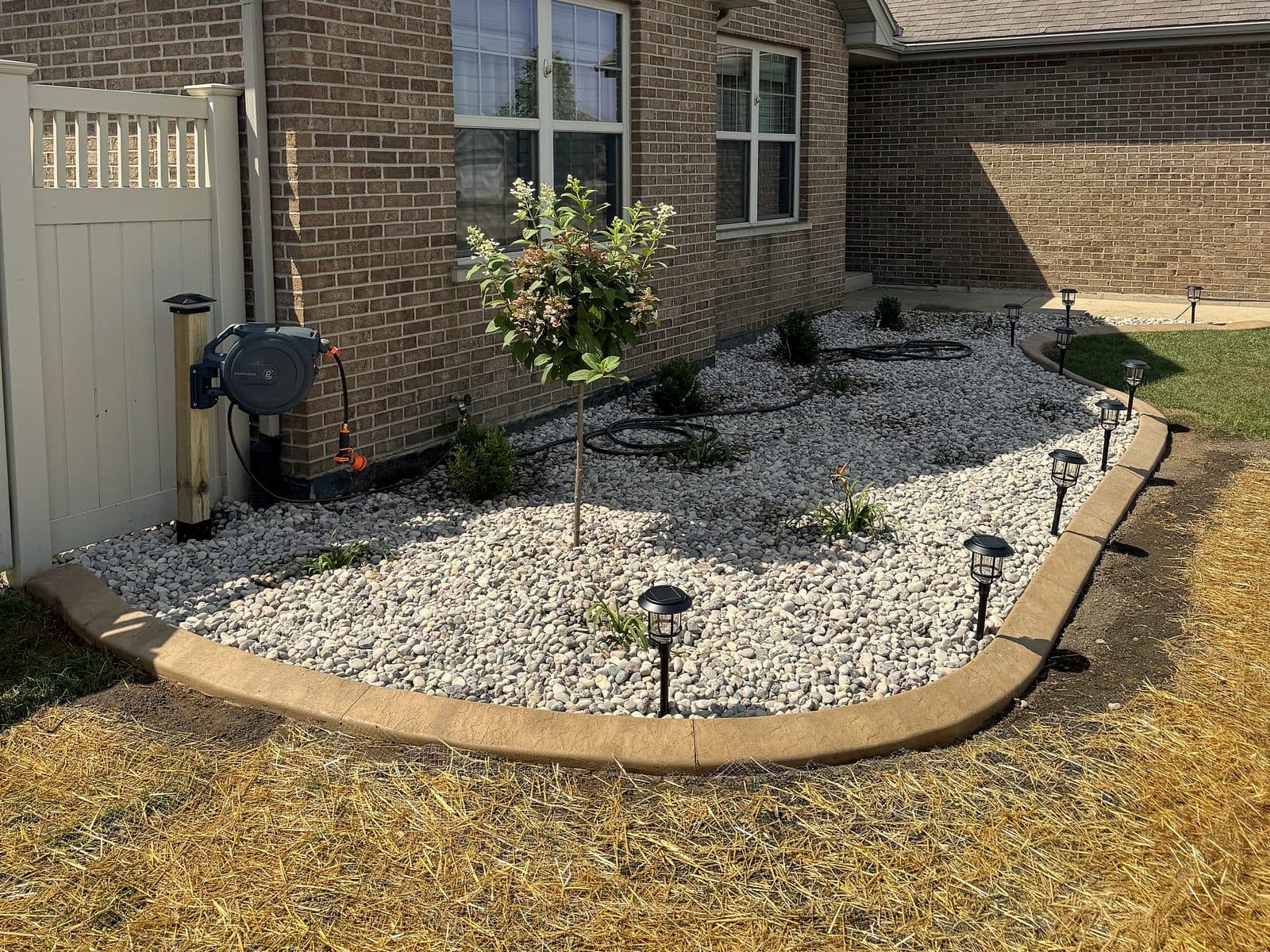 After
Which Landscape Edging Should You Choose?
- The bed holds rock and you never want to fix the edge again: poured concrete curbing.
- You want the thinnest line and will install it yourself: steel, dug in 4 to 6 inches (6 or more for rock) and staked.
- The bed is new or may grow soon: a spade-cut edge until the shape is settled.
- You want to match brick on the house: paver or brick edging, with some resetting.
- You want to mow without trimming: flush pavers, a concrete mow strip or a spade cut.
- Budget comes first and the bed is small: round-top or lip-style plastic, staked and set 4 to 6 inches deep.
- Your edging already heaves every spring: replace it with something heavier or better anchored.
- You want the bed lit at night: a concrete curb with the LED add-on.
If old plastic or metal edging is the problem, our landscape edging replacement service pulls it out and pours a concrete border in its place.
Frequently Asked Questions
What is the best landscape edging for rocks?
Rock needs a continuous edge with no gaps, set deep enough that lawn runners cannot slip under it. Poured concrete curbing does that as one solid ribbon. Steel edging also works if it is at least 6 inches deep, which is what a Colorado Master Gardener recommended on Ask Extension. Pavers with open joints and wood let grass runners through, and a spade-cut edge cannot hold rock in place.
What is the most permanent landscape edging?
Poured concrete curbing is the most permanent common option. HomeGuide and HomeAdvisor both put typical concrete edging lifespan at 10 to 30 years. Metal is also long lasting. Permanent cuts both ways, though: a concrete curb is hard to move, so settle the bed shape first, and know that concrete can crack when frost or settling soil moves it.
How much does landscape edging cost per foot?
Nationally, HomeGuide lists typical materials-only ranges of $0.50 to $3 per foot for plastic, $2 to $6 for metal and $1.50 to $5.50 for brick, plus labor of $1.50 to $10 per foot if you hire it out. Installed poured concrete runs about $3.50 to $17 per foot. Those are typical ranges, not our prices. Jake quotes concrete edging by the foot after measuring your beds.
Why does my plastic landscape edging keep popping up?
Repeated freezing and thawing lifts light, shallow objects out of wet soil, and plastic edging is both. University of Illinois Extension calls plastic probably the hardest edging to keep stable, and HomeGuide notes plants growing underneath can lift it too. Round-top or lip-style edging with steel stakes helps, but if it rides up every spring, a heavier material is the lasting fix.
Is no-dig landscape edging worth it in Illinois?
No-dig edging is fast and cheap, and it can be fine for a quick mulch bed. The catch is depth. Ask Extension advises that borders go 4 to 6 inches deep to keep grass out, and a strip held by short stakes near the surface is exactly what freeze-thaw cycles tend to lift. For a bed you want to stay put for years, dig it in or choose a heavier edge.
What is flat landscape edging?
Flat edging sits level with the lawn so a mower wheel can ride on it and you do not have to string trim along the bed. Pavers or brick set flush, a concrete mow strip and a spade-cut edge all work this way. HomeGuide describes a concrete mow strip as curbing that is lower on one side to make mowing easier.
Who replaces old landscape edging near Manhattan, IL?
Above the Lawn Services, founded by Jake Bogda in Manhattan, IL, pulls out old plastic or metal edging and pours a concrete border in Manhattan, New Lenox, Frankfort and Mokena. Curbing is priced by the foot after an on-site measurement, with plain, colored and stamped profiles. Text a photo or call (815) 520-2558 for a free quote.
Sources
- University of Illinois Extension: Bed Edges (Rhonda Ferree)
- University of Illinois Extension: Edging and Mulching Landscape Beds (Richard Hentschel)
- University of Illinois Extension: Does Sand Improve Clay Soil Drainage?
- Purdue Extension, Indiana Yard and Garden: Mother Nature Gives Spring Bulbs the Heave-Ho
- Chicago Botanic Garden: Frost Heave
- Ask Extension: Keeping grass out of beds
- Ask Extension: Edging between lawn and rock mulch (Colorado Master Gardener)
- HomeGuide: Landscape Curbing Cost
- HomeGuide: Landscape Edging Ideas
- HomeAdvisor: How Much Does Landscape Curbing Cost?
Ready to Replace Old Edging for Good?
Above the Lawn Services pulls out old plastic or metal edging and pours concrete landscape edging in Manhattan, New Lenox, Frankfort and Mokena, IL. Text a photo of your beds to get started, or call (815) 520-2558. Curbing is priced by the foot after a free on-site measurement, with no contracts. See curbing styles and LED lighting.
Get a Free Estimate