On this page
Low maintenance front yard landscaping in northern Illinois comes down to five choices: fewer shrubs picked for their full-grown size, beds covered with rock or mulch, a permanent edge between bed and lawn, rings around trees so grass never touches a trunk, and tough plants that handle clay soil and our winters. Get those right and the front of the house needs a spring cutback, a few weeding passes and a fall leaf blow-out, not weekend after weekend of shearing and edging.
What Makes a Front Yard High Maintenance
In a lot of local subdivisions the front beds were planted by the builder 20 to 30 years ago, and the same problems create most of the work:
- Shrubs that outgrew the spot. A shrub that wants to be 8 feet tall gets sheared every year to stay out of the windows. The Morton Arboretum lists burning bush, a builder favorite, at 15 feet tall and wide and classes it as invasive.
- Too many plants, too close. Crowded beds stay damp, look messy and need constant cutting back.
- Narrow beds hugging the foundation. No shrub has room to grow without touching the siding.
- Loose plastic edging or none. Grass creeps in, the line goes wavy and freeze-thaw winters push thin edging out of the ground.
- Grass right up to tree trunks. Every mowing means trimming around the trunk, and trimmer line scars bark.
- Wood mulch over landscape fabric. The mulch breaks down on top of the fabric into a layer weeds love, and pulling them tears the fabric loose.
Front Yard Landscaping Ideas That Actually Cut the Work
Each of these low maintenance landscaping ideas comes with the upkeep it still needs. Illinois Extension makes the point in its easy-care native plant list: there is lower maintenance, not no maintenance.
1. Take out the old builder shrubs instead of fighting them
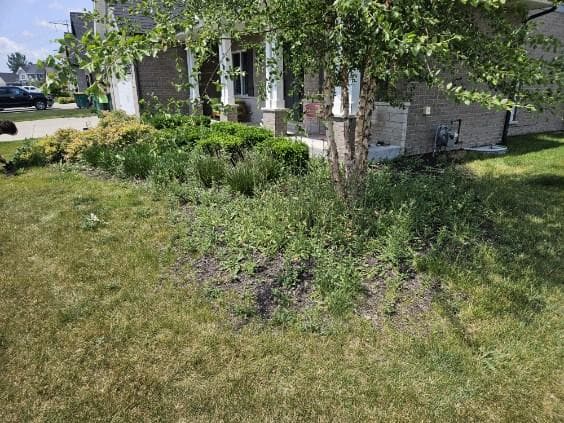
Shearing an oversized yew or burning bush every year is the biggest time sink in most front yards. Replacing it with a shrub that tops out below the window ends that job. Pull the old shrubs roots and all so nothing resprouts; that is what our bush and shrub removal covers. Still needs: watering the new plants until they root in.
 Before
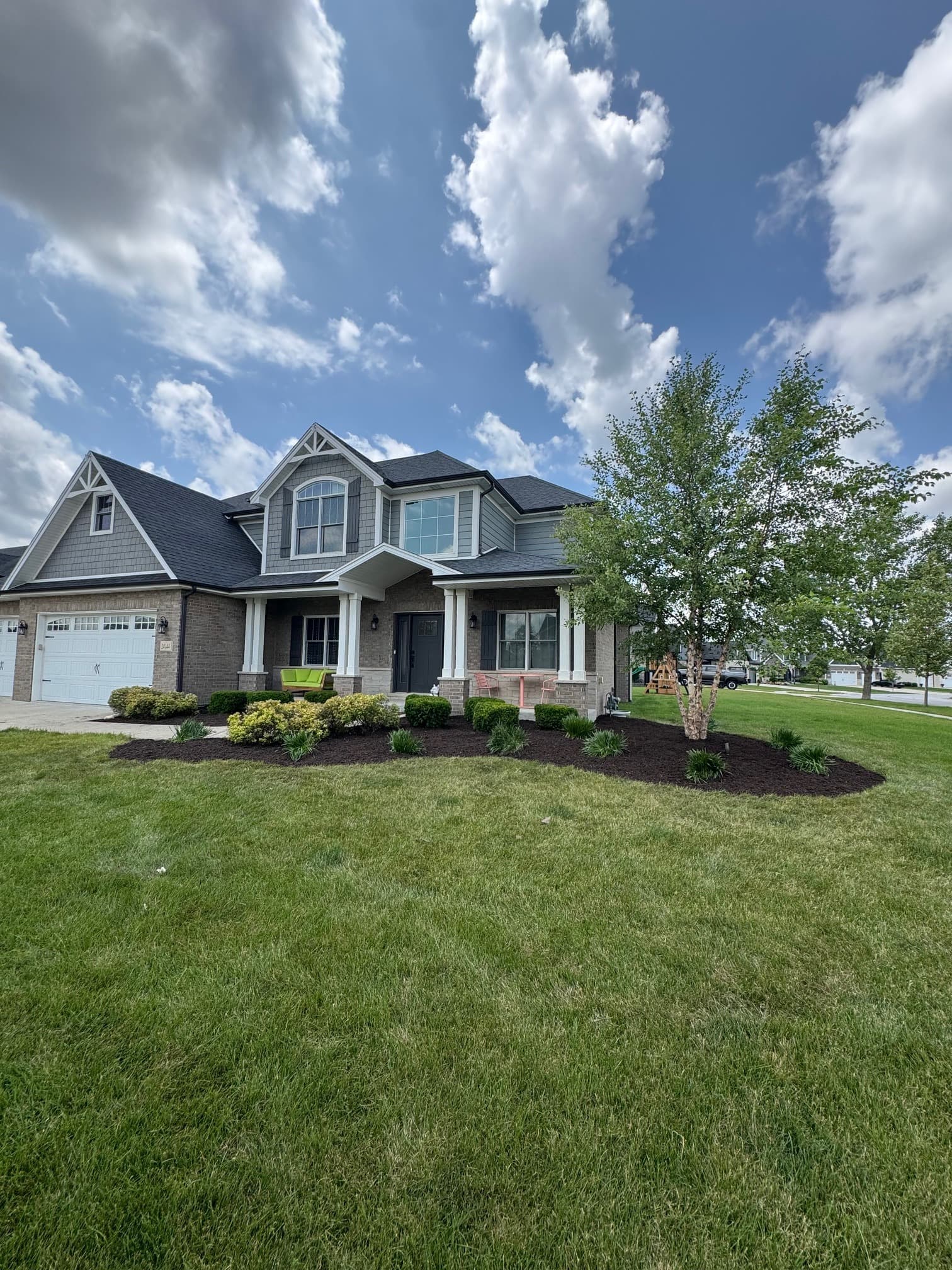 After
2. Make the beds deeper, curved and simple
A deeper bed lets each shrub sit far enough off the wall to grow without hitting the siding. Gentle curves mow in one pass, and one or two big beds are less work than several small islands with sharp corners. If a skinny strip of grass sits between two beds, fold it into the bed. Still needs: a bigger bed takes more rock or mulch up front.
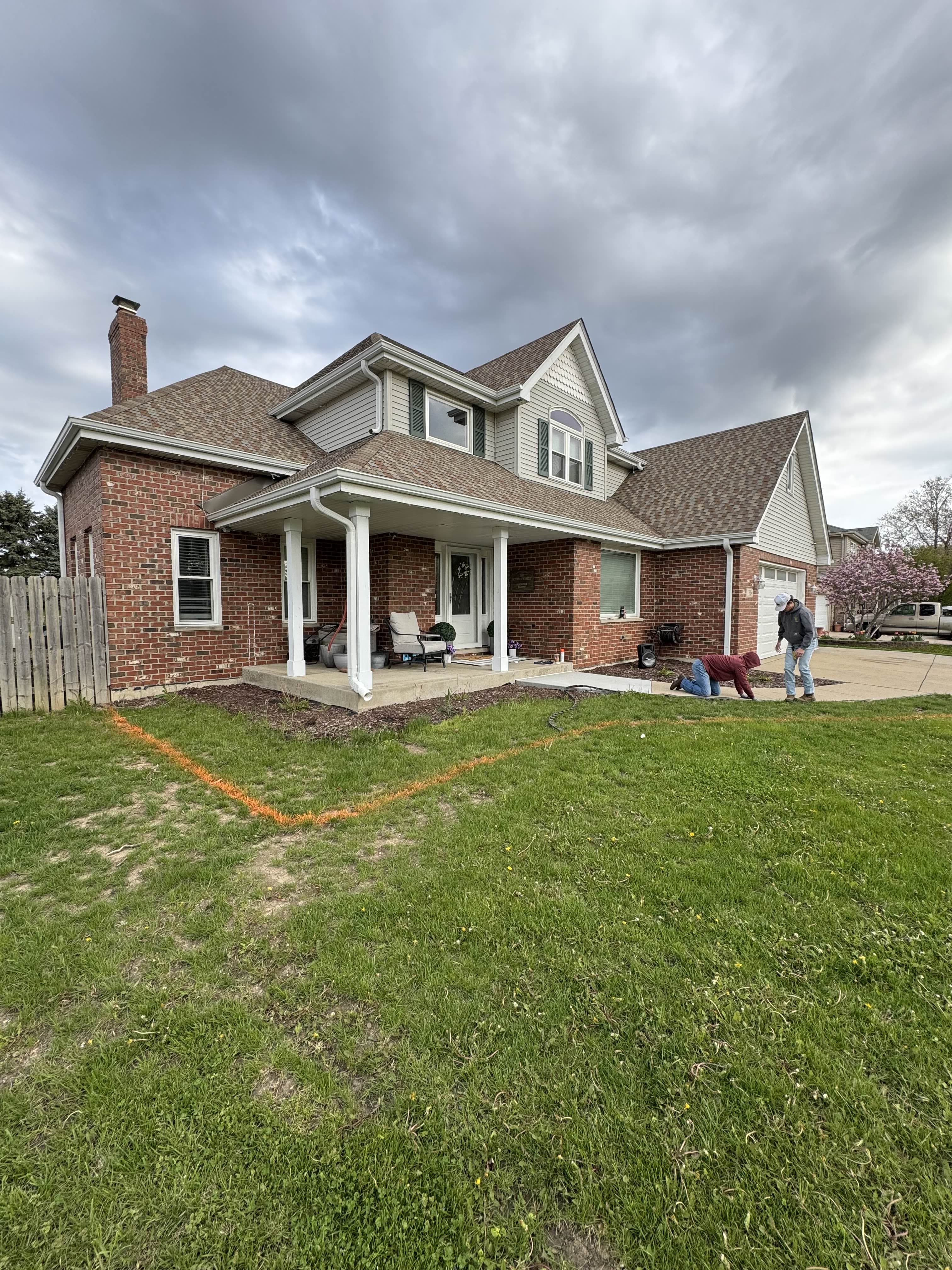 Before
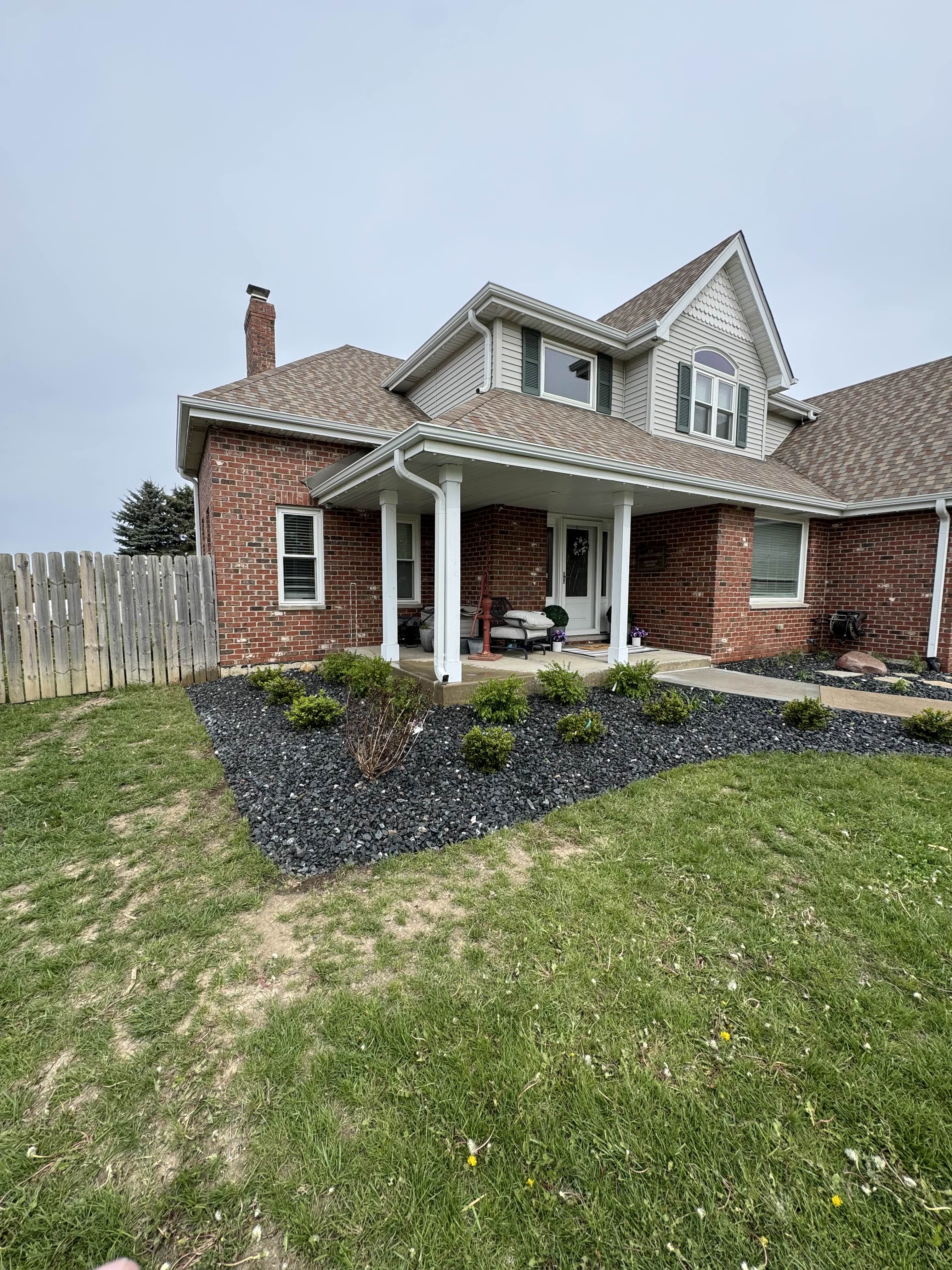 After
3. Leave a clear strip along the foundation
Illinois Extension advises not planting within 1.5 feet of the foundation, where the soil is often too dry. Leave that strip as plain rock or mulch, which also keeps branches off the siding. Keep the finished bed sloping away from the house so heavy spring rain runs off. Still needs: an occasional weed pulled.
4. Repeat a few tough natives instead of one of everything
Extension chose its easy-care natives because they have few insect and disease problems and adapt to a range of conditions. Groups of three or five prairie dropseed, little bluestem or clay-tolerant butterfly weed look planned and share one care routine. Still needs: a cutback in late winter, and little bluestem spreads by seed, so pull the extras.
Spacing: How to Keep Shrubs Out of the Windows
Builder plantings fail for one main reason: shrubs were planted close together and tight to the siding. The Morton Arboretum warns that a plant that outgrows its space needs severe pruning or removal, both hard and expensive. These rules prevent it:
- Shop by full-grown size, not pot size. Read the mature height and width on the tag.
- Under a window, mature height should be below the sill.
- Keep plants 1.5 feet off the foundation, per Illinois Extension.
- Set each shrub's center half its mature width plus 1.5 feet from the wall.
- Space shrubs center to center at their mature width. Extension suggests allowing spreading shrubs a width equal to their eventual height.
- Put the tallest plants at the corners, no taller than about two thirds of the corner height.
- Accept a sparse look for a couple of years. Fill gaps with perennials or rock, not more shrubs.
| Shrub | Full-grown width | Center from wall | Center to center |
|---|---|---|---|
| Green Velvet boxwood | 2 to 3 ft | About 3 ft | 3 ft |
| Bobo panicle hydrangea | 3 to 4 ft | About 3.5 ft | 4 ft |
| Densiformis yew | 4 to 6 ft | About 4.5 ft | 5 to 6 ft |
| Palibin dwarf lilac | 5 to 7 ft | About 5 ft | 6 to 7 ft |
| Gro-Low fragrant sumac | 6 to 8 ft | About 5.5 ft | 6 to 8 ft |
Rule of thumb: half the full-grown width plus the 1.5 ft dry strip Illinois Extension describes. Widths from The Morton Arboretum.
Run the numbers and a row of Densiformis yews needs a bed about 7 to 8 feet deep, deeper than many original builder beds. That is why our front yard landscaping jobs usually make the beds bigger before anything new goes in.
Low Maintenance Plants for the Front of the House in Illinois
Low maintenance shrubs for zone 5, and why Will County is now 6a
Older plant tags call this area zone 5. On the 2023 USDA Plant Hardiness Zone Map, the ZIP codes for Manhattan, New Lenox, Frankfort and Mokena are zone 6a: an average coldest night of 5 to 10 degrees below zero Fahrenheit. The Illinois State Climatologist notes 6a now runs from Lake County to Kankakee County. Zones are averages, though; Springfield, also 6a, dropped below 10 below zero in 11 of the 30 winters from 1991 to 2020. So use shrubs rated to zone 5 or colder. Everything in these tables is, per The Morton Arboretum.
| Plant | Full-grown size | Why it is easy | Upkeep it still needs |
|---|---|---|---|
| Bobo panicle hydrangea | 2 to 3 ft tall, 3 to 4 ft wide | Blooms on new wood, so hard winters do not cost flowers | Prune in late winter |
| Little Lime panicle hydrangea | 3 to 5 ft tall | Same as Bobo, a size up for corners | Prune in late winter |
| Boxwood (Green Velvet, Green Mound, Chicagoland Green) | 2 to 3 ft tall and wide | Small evergreen, takes part shade | Keep away from salt and wind; water in late fall |
| Densiformis or Tauntonii yew | 3 to 4 ft tall, 4 to 6 ft wide | Evergreen that takes pruning; Tauntonii resists winter burn | Needs drainage, not wet spots; poisonous |
| Palibin dwarf lilac | 4 to 5 ft tall, 5 to 7 ft wide | Fragrant May flowers, slow growing, resists mildew better than most lilacs | Prune right after bloom; corners only |
| Gro-Low fragrant sumac (native) | 2 to 3 ft tall, 6 to 8 ft wide | Handles dry soil and road salt | Every third year, cut out a third of the old canes |
| Trailing juniper (Blue Rug, Bar Harbor) | 6 in to 1 ft tall, 6 to 8 ft wide | Tolerates clay, drought and salt | Watch for tip blight and bagworms |
| Shrubby cinquefoil (native) | 1 to 4 ft tall, 2 to 4 ft wide | Takes poor, dry, alkaline soil; yellow flowers all summer | Thin old stems now and then |
| Plant | Full-grown size | Why it is easy | Upkeep it still needs |
|---|---|---|---|
| Annabelle smooth hydrangea | 3 to 4 ft tall | Best in part shade, no serious pests | Water in dry spells; cut back in late winter |
| Southern bush-honeysuckle | 3 to 5 ft tall, up to 5 ft wide | Clay and dry tolerant, deer resistant | Suckers; prune in spring; no soggy spots |
| Everlow yew | 1.5 to 2 ft tall, 3 to 4 ft wide | Low evergreen for sun or shade | Good drainage only |
Perennials and grasses for the front edge. From Extension's easy-care native list: prairie dropseed (2 to 3 feet, sun, heat and drought tolerant), little bluestem (about 3 feet, sun, any soil that is not wet), butterfly weed (1 to 2 feet, sun, clay tolerant) and purple coneflower (2 to 4 feet, drought tolerant). Catmint is not native, but Extension rates it low maintenance in full sun and hardy to zone 4. For shade, the list suggests sedges, wild ginger as a 6-inch ground cover and ferns.
Skip these under windows: burning bush (15 feet and invasive), Hicksii yew (6 to 8 feet tall) and Limelight hydrangea (6 to 8 feet tall and wide). Fine plants elsewhere, but under a window they mean yearly shearing.
Rock or Mulch?
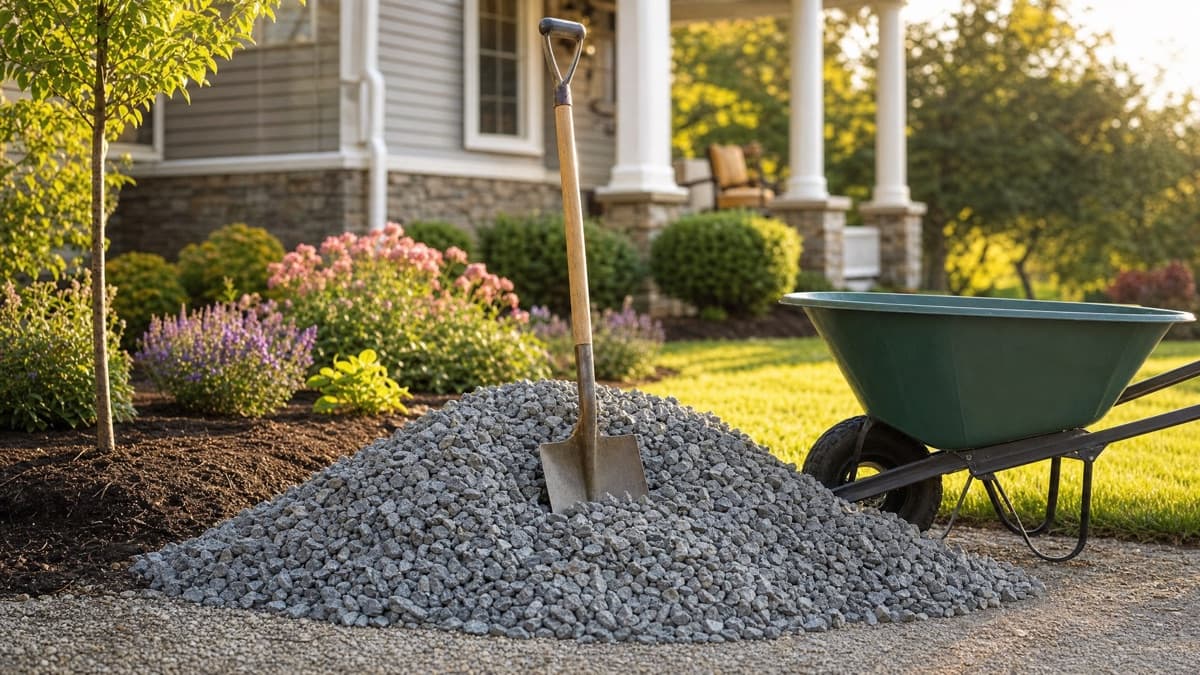
Rock never needs a yearly top-up, and Illinois Extension cites research showing it does not raise summer soil temperatures. It is not permanent weed control, though: seeds and soil blow in between the stones, rock adds nothing to plant health, and it is a chore to remove later. Wood mulch feeds the soil, but the Morton Arboretum says to check its depth every year and top it up. If you use landscape fabric, put it under rock, never under mulch. Plenty of front yards use rock along the foundation and mulch around the plants. Our full comparison is in rock vs mulch for Illinois beds, and if rock wins, see how we build decorative rock beds.
Permanent Edging Ends the Weekly Trim
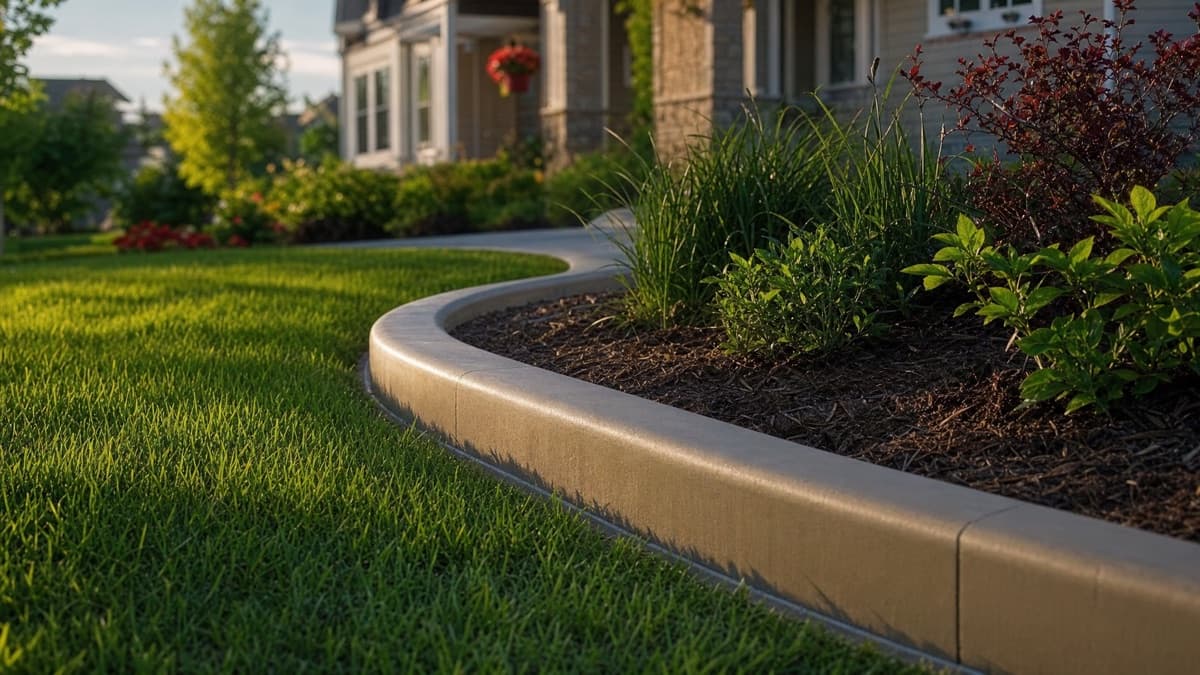
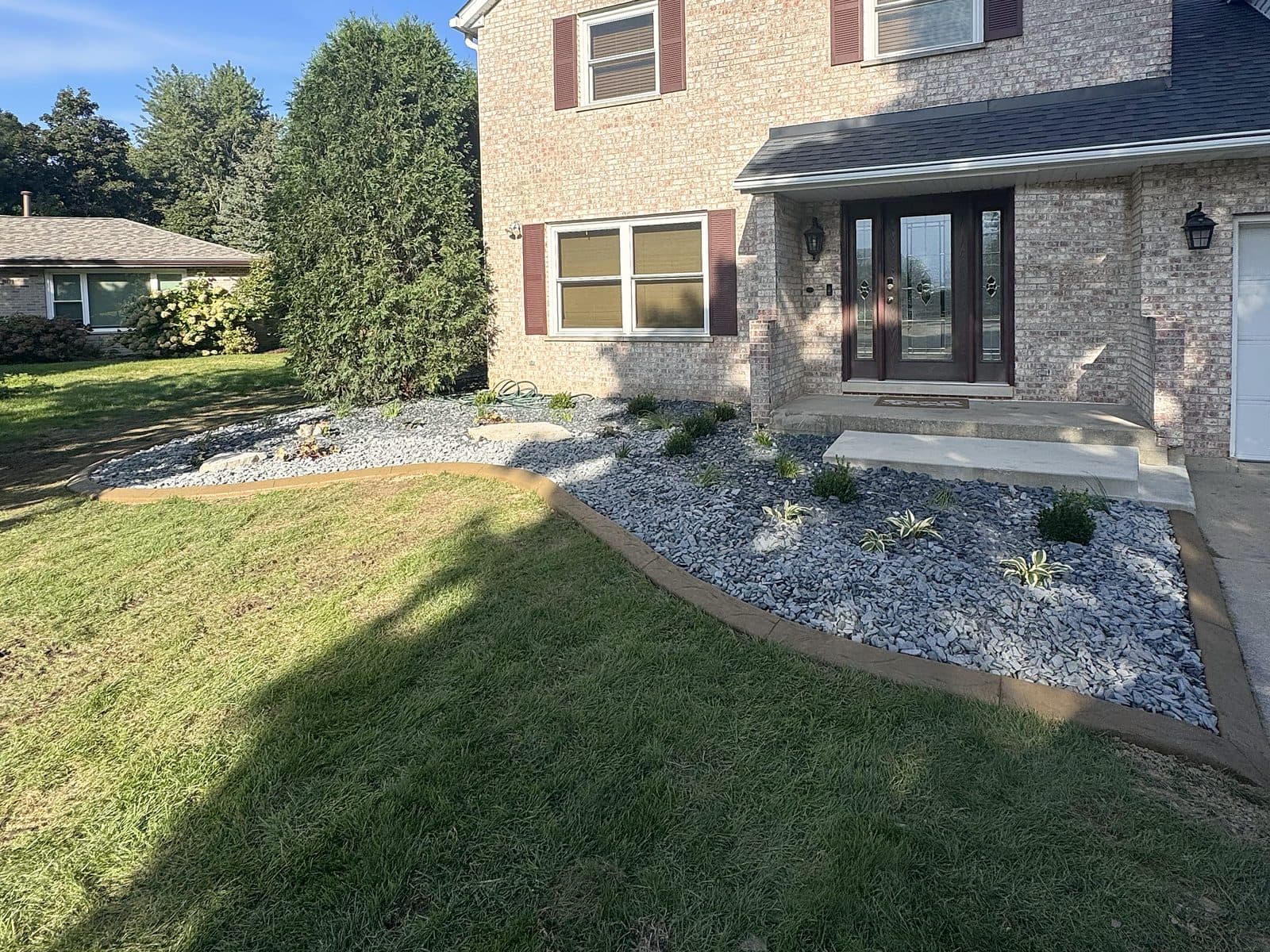
A loose plastic edge lets grass run under it, gets pushed up by frost and needs re-setting all season. A poured concrete curb is one continuous piece that doubles as a mow strip for the mower wheel. Paver bullet edging is the other permanent option and suits mulch beds. Neither is zero maintenance: grass seed still blows into the bed, and concrete can crack. Compare materials in our guide to the best landscape edging, or see concrete curbing, including optional LED lighting along the curb.
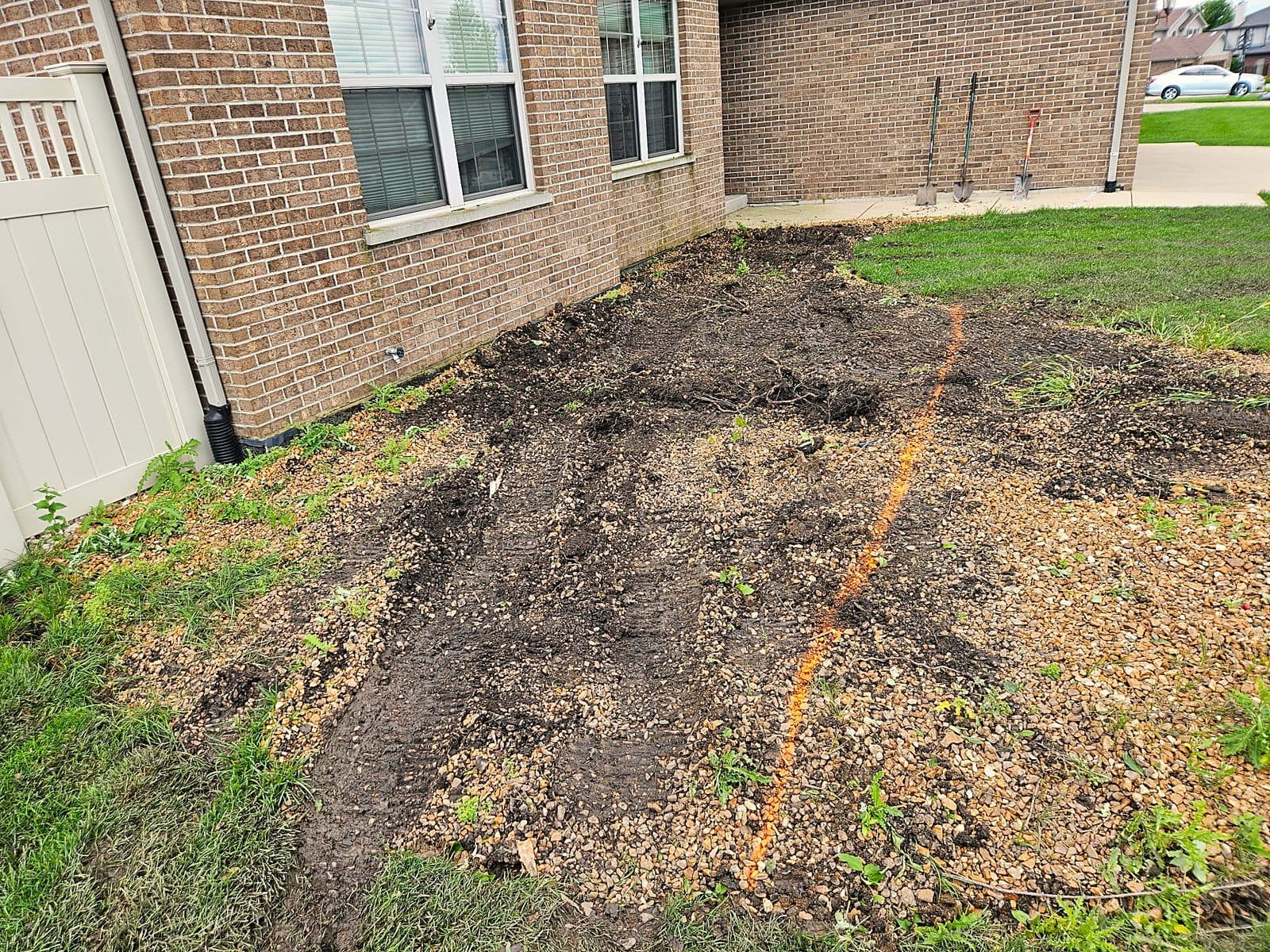 Before
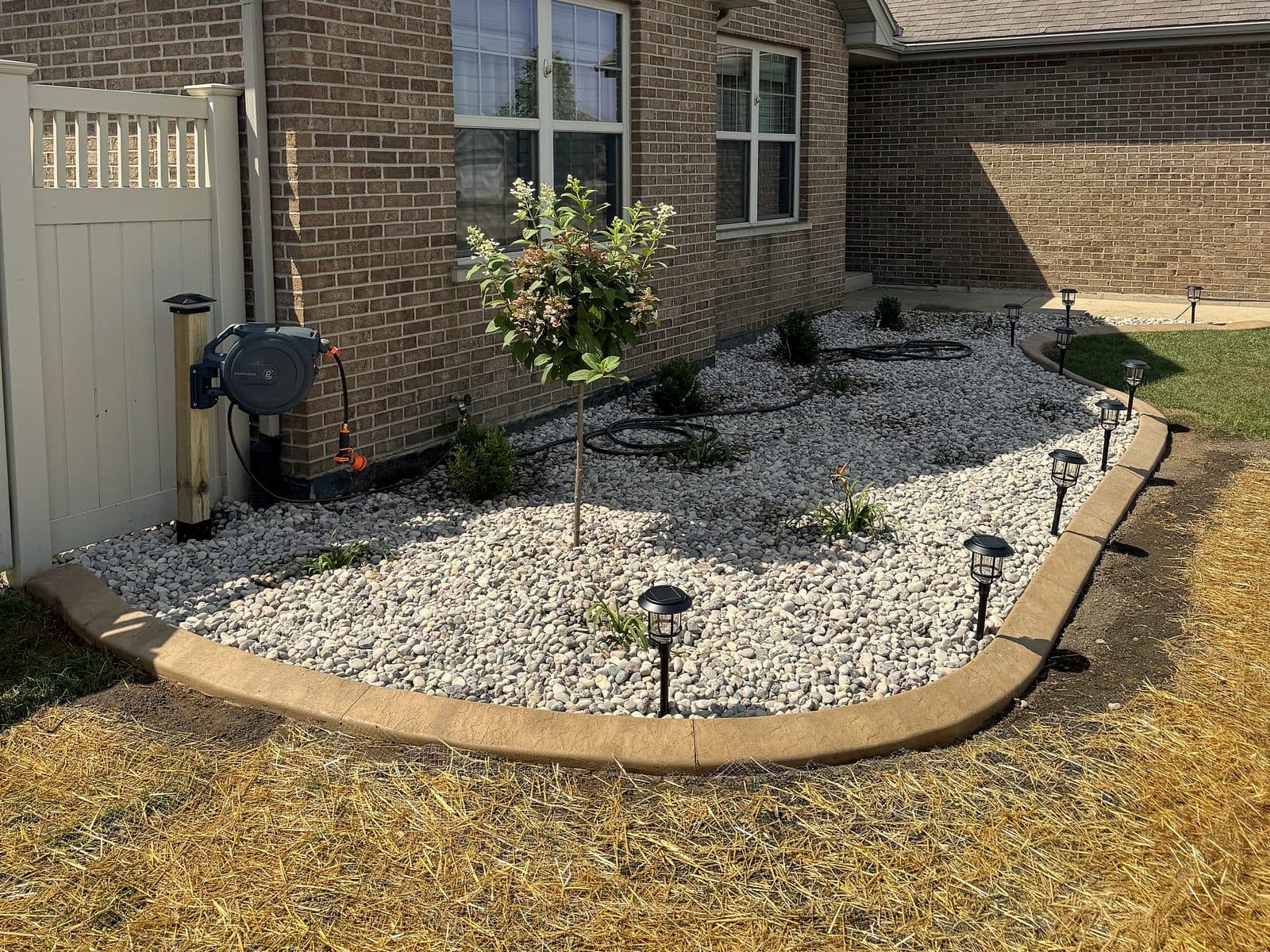 After
Landscaping Around Trees: Tree Rings That Stay Neat
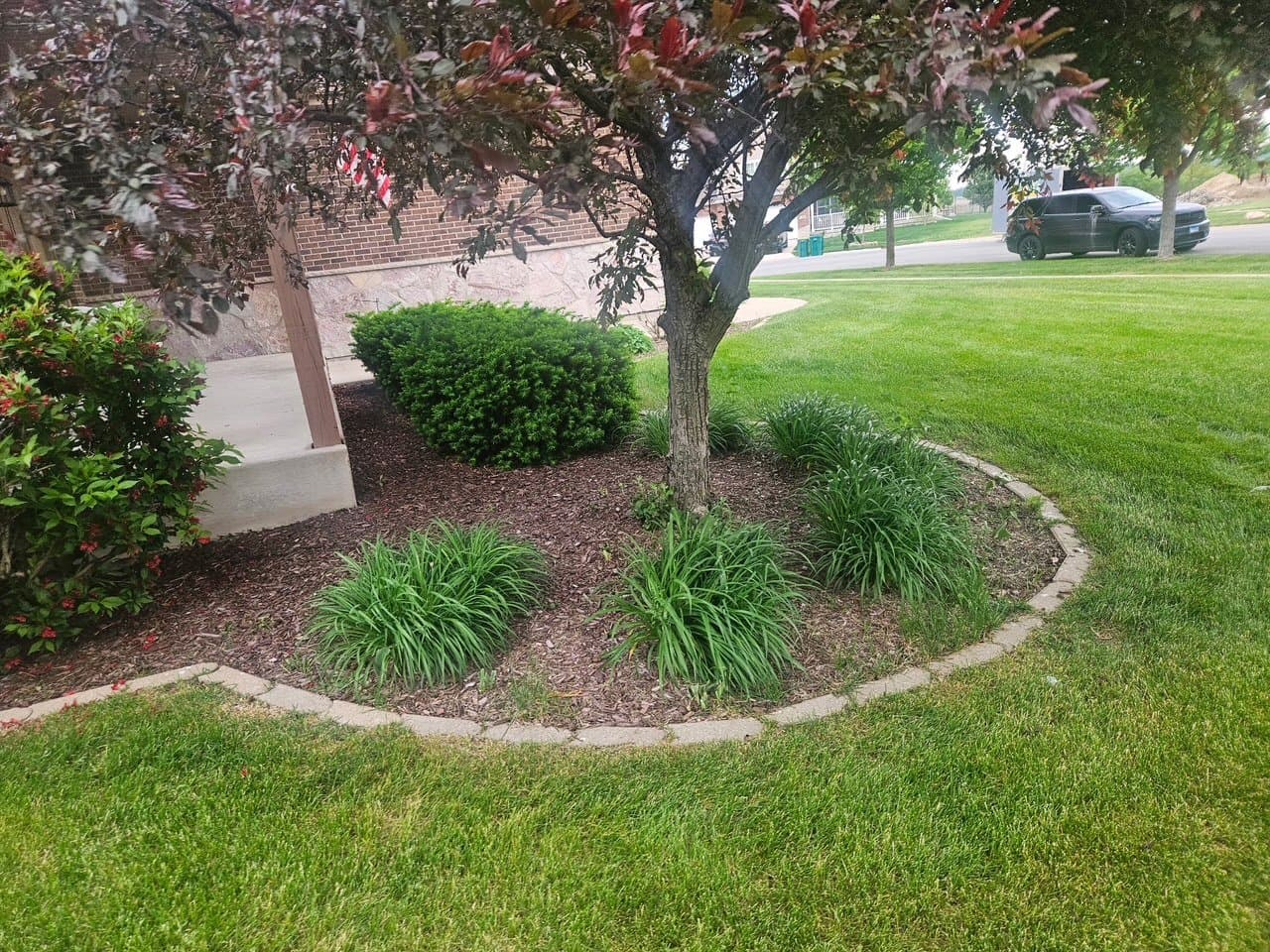
Grass growing right to the trunk is the fussiest spot in a front yard: the mower cannot reach it, and trimmer line chews bark. Tree ring landscaping fixes it. The Morton Arboretum says the mulched area should reach the drip line on a young tree and cover at least a 4 to 5 foot circle around older trees, 3 to 4 inches deep, with a donut hole around the trunk. Illinois Extension adds that piling mulch against the trunk is like planting the tree too deep.
- Go wide. A bigger ring is easier to mow around and covers more roots.
- Keep the root flare showing. No soil, mulch or rock piled against the trunk.
- Mulch is better for the tree. If you want rock for the look, keep it shallow and off the trunk.
- Plant small. A few sedges or wild ginger tucked between roots.
- Edge it. A concrete curb or paver ring keeps grass out of the circle.
A Year of Upkeep for a Low Maintenance Front Yard
For shrub-by-shrub pruning timing, see when to trim bushes in Illinois.
| When | What to do |
|---|---|
| March to early April | Cut back grasses and perennials. Prune panicle and smooth hydrangeas. Every third year, renew Gro-Low sumac. |
| April to May | Pull the first weeds, top up thin mulch, blow winter debris out of rock beds. |
| May to June | Prune lilacs right after they bloom, only if needed. |
| June to August | Quick weeding passes. Water new plants and Annabelle hydrangeas in dry spells. |
| September to November | Water boxwood and evergreens well before the ground freezes. Blow leaves out of rock beds before snow. |
| Winter | Keep de-icing salt off boxwood where you can. |
Frequently Asked Questions
What is the lowest maintenance front yard landscaping?
A few shrubs chosen for their full-grown size, beds covered in rock or mulch, a poured concrete curb between bed and lawn, and rings around trees so grass never touches a trunk. That removes the yearly shearing and edge trimming. It still needs a spring cutback, some weeding and a fall leaf blow-out.
What are good low maintenance shrubs for zone 5?
Compact boxwood, Densiformis or Tauntonii yew, Bobo or Little Lime panicle hydrangea, Palibin dwarf lilac, Gro-Low fragrant sumac, trailing juniper and shrubby cinquefoil are all rated to zone 5 or colder by The Morton Arboretum. Manhattan, New Lenox, Frankfort and Mokena are zone 6a now, so zone 5 shrubs leave a margin for hard winters.
Is rock or mulch lower maintenance in a front yard?
Rock is lower maintenance year to year because it never needs topping up, but weeds still sprout in the dust and leaves between the stones. Mulch is better for plants and soil but needs a yearly check and top-up. Many front yards use both.
What can I plant in front of my house that will not block the windows?
Pick shrubs whose full-grown height is below the sill: Green Velvet boxwood or Bobo panicle hydrangea (2 to 3 feet), Everlow yew (1.5 to 2 feet) or Gro-Low fragrant sumac (2 to 3 feet). Keep them 1.5 feet off the foundation and space them at their full width.
How do you landscape around a tree in the front yard?
Make a ring at least 4 to 5 feet across, cover it with mulch pulled back from the trunk, and keep soil and mulch off the root flare where the trunk widens. Edge it with curbing or pavers so the mower and trimmer stay off the bark.
Does landscape fabric stop weeds in a front bed?
Only for a while. Illinois Extension notes that fabric suppresses weeds for a couple of years before its pores clog with silt, and new weeds root in whatever collects on top. Skip it under wood mulch. Under rock, its main job is keeping the stone from settling into clay soil.
Sources
- USDA Plant Hardiness Zone Map (2023), USDA Agricultural Research Service
- New USDA Plant Hardiness Zone Map for Illinois, Illinois State Climatologist
- Update your home with new foundation plants, University of Illinois Extension
- Easy-Care Native Plants, University of Illinois Extension
- Catmint, University of Illinois Extension
- How to Select a Garden or Landscape Mulch, University of Illinois Extension
- The disadvantages of landscape fabric, University of Illinois Extension
- Tree troubles usually start at the base of the trunk, University of Illinois Extension
- Native Shrubs of the Midwest for the Home Landscape, The Morton Arboretum
- How to Mulch Trees and Shrubs, The Morton Arboretum
- The Morton Arboretum plant pages: panicled hydrangea, boxwood hybrids, Anglo-Japanese yew, Meyer lilac, fragrant sumac, trailing juniper, wild hydrangea, southern bush-honeysuckle, burning bush
Want a Front Yard That Mostly Takes Care of Itself?
Above the Lawn Services does whole front yard landscaping in Manhattan, New Lenox, Frankfort and Mokena, IL: old shrubs out, deeper beds, right-sized plants, rock or mulch, tree rings and a concrete curb. Call (815) 520-2558 or text a few photos of the front of your house for a free quote, often the same day.
Get a Free Estimate